What to Eat After a Workout: A Beginner’s Guide
Finishing a workout is only one part of getting fitter. What you do afterward can also influence how well you recover and prepare for your next training session.
If you’re wondering what to eat after a workout, the answer doesn’t have to involve a complicated meal plan or an expensive recovery supplement.
For most beginners, the basics are straightforward: eat enough overall, include a good source of protein, include carbohydrates when they fit your activity and energy needs, replace fluids, and choose foods that provide useful nutrients.
Your post-workout meal also doesn’t need to be eaten the moment you put the weights down. The importance of timing depends on your overall diet, what you ate before exercising, how demanding the workout was, and when you’ll train again.
This guide explains how to approach post-workout nutrition in a practical way.
Why Does Post-Workout Nutrition Matter?
Exercise places stress on your body.
Resistance training creates a stimulus for your muscles to adapt, while endurance and other forms of exercise use energy and can reduce stored carbohydrate availability.
Recovery gives your body an opportunity to adapt to that training stress.
Nutrition is one part of the recovery process. ACSM notes that recovery involves adequate energy and appropriate macronutrient intake, including carbohydrates and protein, while hydration and sleep also matter.
That doesn’t mean one meal determines whether your workout was successful.
Your overall eating pattern matters much more than a single plate of food.
Think of your post-workout meal as one part of the bigger recovery picture.
The Three Basics of a Post-Workout Meal
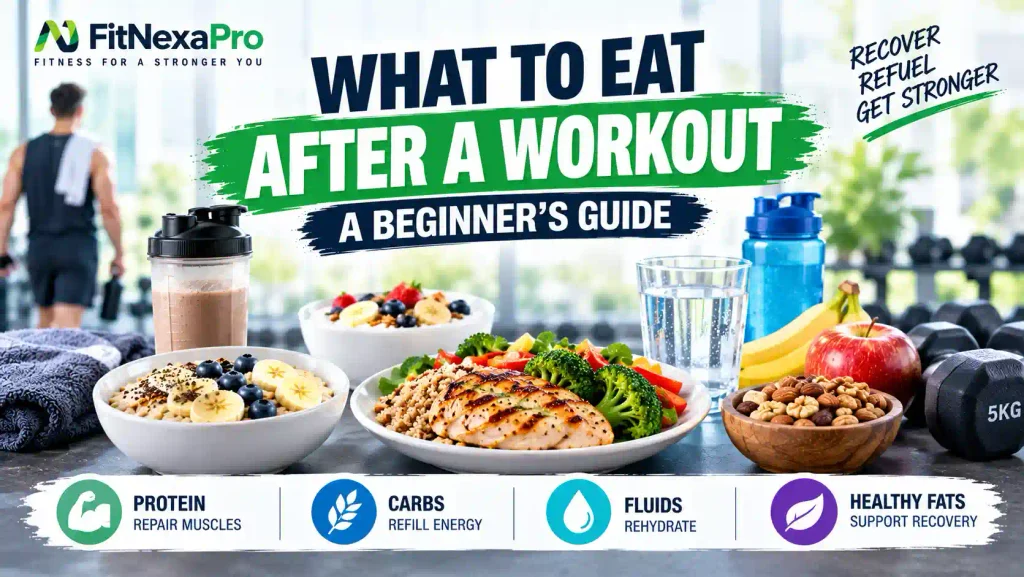
A simple way to build your meal is to think about three things:
Protein
Carbohydrates
Fluids
You can also include vegetables, fruit and healthy fats to make the meal more nutritionally complete.
The amount you need depends on your body, training, goals and overall diet.
Protein After a Workout
Protein is probably the nutrient most commonly associated with post-workout recovery.
That’s because protein supplies amino acids that your body uses to build and maintain tissues, including muscle.
But there is an important distinction:
You don’t need to consume a huge amount of protein immediately after every workout.
Your total protein intake across the day is important.
ACSM’s sports-nutrition guidance emphasizes that building muscle involves more than simply consuming more protein. Resistance exercise, adequate energy, appropriate nutrient distribution and recovery all contribute.
Good post-workout protein choices include:
- Chicken
- Fish
- Eggs
- Greek yogurt
- Milk
- Cottage cheese
- Tofu
- Lentils
- Beans
- Lean meat
You can also use a protein shake if it is convenient, but whole foods can work perfectly well.
How Much Protein Should You Eat After Exercise?
There isn’t one universal post-workout amount that applies to everyone.
Your ideal intake depends on factors such as:
- Body size
- Training volume
- Training goals
- Total daily protein intake
- Age
- Overall calorie intake
- What you ate earlier in the day
This is why it can be misleading to say that everyone must consume exactly the same amount of protein immediately after exercising.
Instead, focus first on meeting your overall daily protein needs.
Then distribute protein-containing meals and snacks throughout your day in a way that works with your schedule.
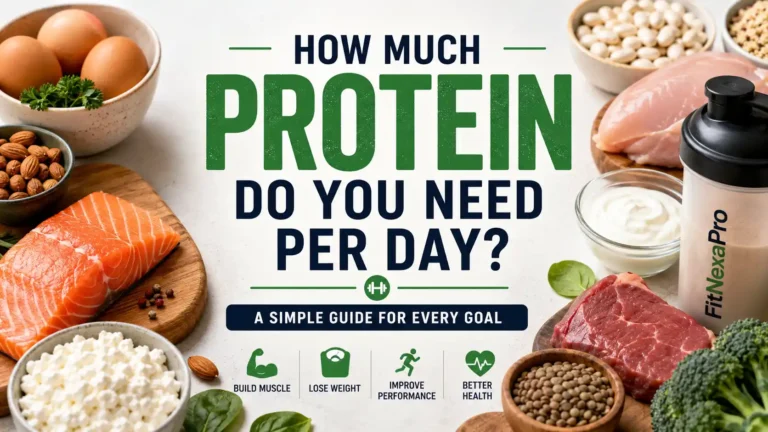
If you’re building a muscle-focused nutrition plan, your existing FitNexaPro article How Much Protein Do You Need Per Day? can provide the broader context.
What About Carbohydrates After a Workout?
Carbohydrates can also play an important role in recovery.
During exercise, your body can use stored carbohydrate in the form of muscle glycogen.
Eating carbohydrate after training helps replenish those stores. ACSM specifically identifies post-exercise carbohydrates as important for restoring glycogen, particularly when recovery demands are higher.
Useful carbohydrate choices include:
- Rice
- Potatoes
- Oats
- Pasta
- Bread
- Whole grains
- Fruit
- Beans
- Lentils
- Cereal
The amount you need depends heavily on your workout.
Someone doing a long endurance session and training again later may have considerably different carbohydrate requirements from someone who completed a short beginner strength workout.
So don’t assume that every workout requires a huge carbohydrate-heavy meal.
Do You Need Carbohydrates After Strength Training?
Carbohydrates can still be part of a good post-workout meal after strength training.
For example:
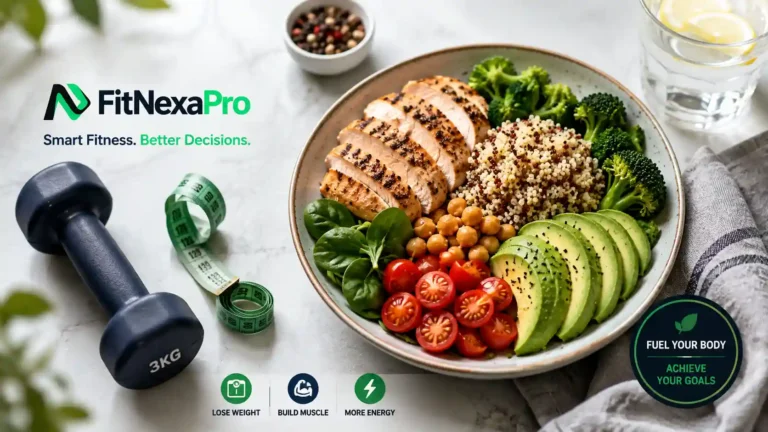
Chicken + rice + vegetables
or
Eggs + potatoes + fruit
or
Greek yogurt + oats + banana
But the amount should fit your overall energy needs.
If your goal is weight loss, you don’t need to eliminate carbohydrates simply because you’re trying to lose body fat.
Instead, consider your total calorie intake and overall diet.
Protein + Carbohydrates: A Simple Combination
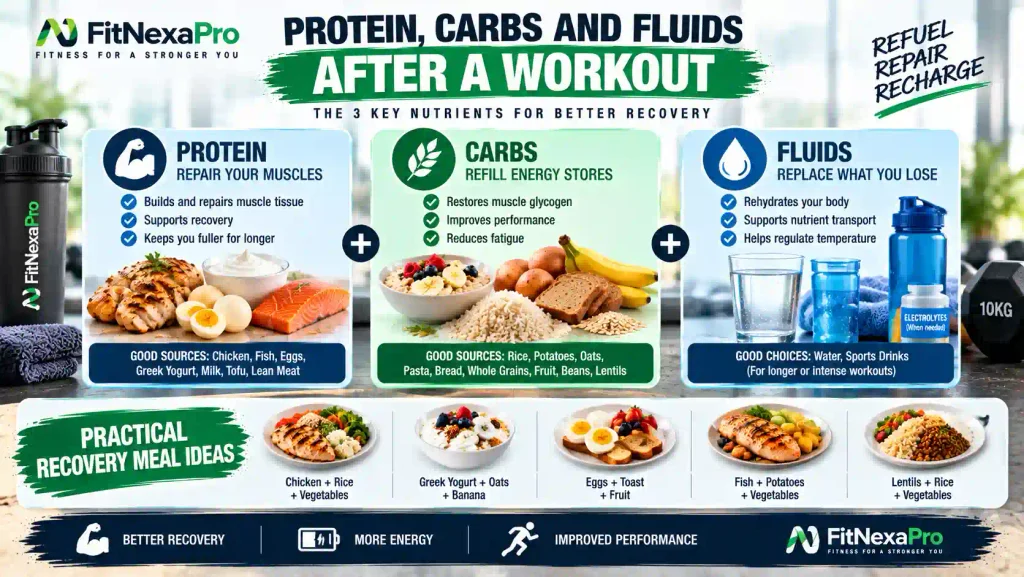
For many people, combining protein and carbohydrates is an easy way to create a practical recovery meal.
For example:
Chicken + Rice
Chicken provides protein while rice provides carbohydrate.
Greek Yogurt + Banana + Oats
Yogurt provides protein, while banana and oats provide carbohydrates.
Eggs + Toast + Fruit
Eggs provide protein and toast and fruit provide carbohydrates.
Fish + Potatoes + Vegetables
Fish provides protein and potatoes provide carbohydrates, while vegetables add fiber and micronutrients.
You don’t need a special combination.
The goal is simply to build a meal that fits your nutritional needs.
What About Healthy Fats After a Workout?
Fat shouldn’t be treated as something you must avoid after exercise.
Foods containing dietary fat can provide energy and contribute important nutrients to your overall diet.
Examples include:
- Avocado
- Nuts
- Seeds
- Olive oil
- Nut butter
- Fatty fish
However, if you need to replenish carbohydrate stores very quickly for another demanding session, a very high-fat meal may not be the most practical option because it can slow digestion.
For ordinary recreational workouts, there’s generally no reason to fear having some dietary fat as part of your normal balanced meal.
The bigger picture is your total diet.
Don’t Forget Fluids
Exercise can cause fluid losses through sweating and increased breathing.
Replacing those fluids is an important part of recovery.
ACSM identifies hydration as an important component of sports nutrition and recovery.
For many normal workouts, water is enough.
Your fluid needs can be higher when:
- The workout is long
- You exercise in hot weather
- You sweat heavily
- Training intensity is high
- You participate in endurance activities
If you’ve exercised for a long time or lost a significant amount of fluid through sweating, replacing electrolytes may also become relevant.
You don’t need a sports drink after every gym session.
A person completing a 40-minute resistance workout in a temperature-controlled gym has different hydration needs from someone cycling outdoors for several hours in hot weather.
When Should You Eat After a Workout?
This is one of the biggest sources of confusion.
You’ve probably heard that you have to eat within a very short “anabolic window” or your workout will be wasted.
That’s an oversimplification.
Your body doesn’t suddenly stop recovering because you didn’t eat within a particular 30-minute period.
Your post-workout nutrition should be considered alongside what you ate before training and your overall daily intake.
For example, if you ate a balanced meal containing protein and carbohydrates two hours before exercising, you already had nutrients available before your workout.
You don’t necessarily need to panic about eating immediately after finishing your final set.
On the other hand, if you trained after a long period without food, eating afterward may be a practical way to begin replacing energy and nutrients.
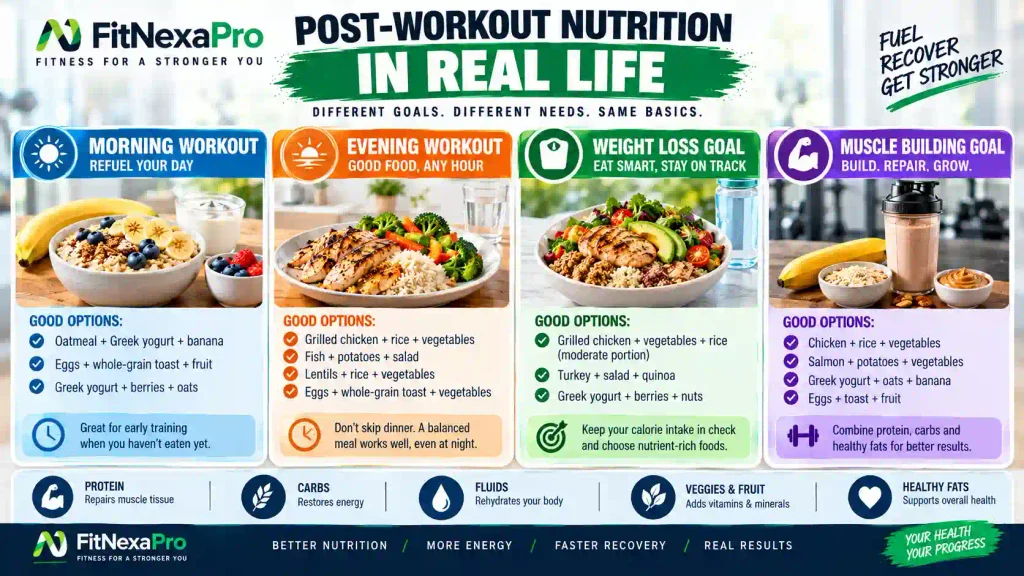
What to Eat After a Morning Workout
Morning workouts can create a simple situation.
Imagine you wake up, exercise and haven’t eaten breakfast yet.
After training, you could have:
Oatmeal + Greek yogurt + banana
or
Eggs + whole-grain toast + fruit
or
Greek yogurt + berries + oats
These meals provide a combination of protein and carbohydrate while also contributing other nutrients.
If your workout was particularly long or demanding, you may need a more substantial meal.
What to Eat After an Evening Workout
Suppose you finish your workout at 8:00 PM.
You don’t need to skip dinner simply because it’s late.
A normal balanced meal can work.
For example:
Grilled chicken + rice + vegetables
or
Fish + potatoes + salad
or
Lentils + rice + vegetables
or
Eggs + whole-grain toast + vegetables
The idea that eating after a certain evening hour automatically prevents fat loss is not a useful way to think about nutrition.
Your overall energy intake and dietary pattern matter more than the clock alone.
What to Eat After a Workout if You Want to Lose Weight
If fat loss is your goal, your post-workout meal still needs to provide useful nutrition.
You don’t need to “earn” food by exercising, and you don’t need to avoid eating after training simply because you’re trying to lose weight.
Instead, consider:
Protein: Include a satisfying protein source.
Carbohydrates: Choose an amount that fits your activity and calorie needs.
Vegetables or fruit: Add nutrient-rich foods and variety.
Fats: Include appropriate portions of healthy fat.
Calories: Keep your overall daily intake aligned with your goal.
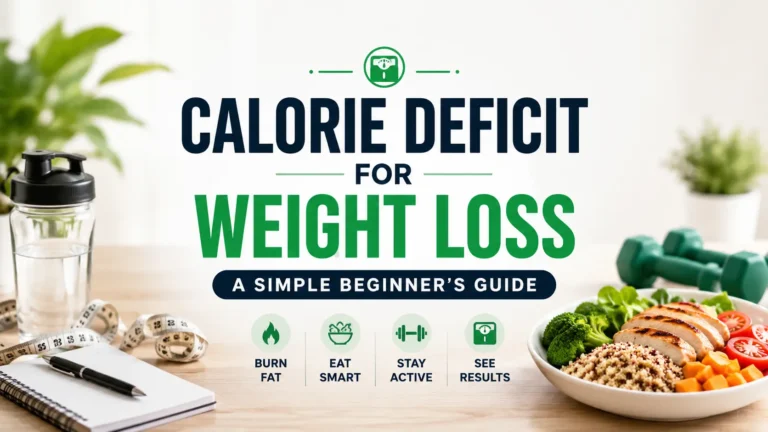
A post-workout meal can fit comfortably into a calorie deficit.
For example:
Grilled chicken + vegetables + a moderate portion of rice
can be part of a weight-loss diet without needing to remove the rice completely.
What to Eat After a Workout to Build Muscle
Muscle growth requires more than eating a high-protein meal after training.
You need a combination of:
- Progressive resistance training
- Adequate protein
- Sufficient energy
- Recovery
- Sleep
- Consistency
ACSM’s current sports-nutrition guidance similarly emphasizes that muscle development isn’t simply a matter of consuming more protein.
A practical muscle-focused post-workout meal could be:
Chicken + rice + vegetables
Salmon + potatoes + vegetables
Greek yogurt + oats + banana
Eggs + toast + fruit
The best option is often the one you can eat consistently while meeting your overall nutrition needs.
Easy Post-Workout Meals for Beginners
You don’t need to become a professional meal-prep expert.
Here are some simple combinations.
Option 1: Chicken Rice Bowl
- Grilled chicken
- Rice
- Mixed vegetables
- Small amount of olive oil or another suitable fat source
Option 2: Yogurt Bowl
- Greek yogurt
- Oats
- Banana or berries
- Nuts or seeds
Option 3: Eggs and Toast
- Eggs
- Whole-grain toast
- Fruit
- Vegetables
Option 4: Fish and Potatoes
- Grilled fish
- Potatoes
- Vegetables
- Fruit if desired
Option 5: Lentil and Rice Bowl
- Lentils
- Rice
- Vegetables
- Yogurt or another protein-rich side
Option 6: Quick Smoothie
If you don’t have time for a full meal, a smoothie can be convenient.
For example:
- Milk or yogurt
- Banana
- Oats
- Berries
You can adjust the ingredients according to your nutritional needs.
What If You Aren’t Hungry After Exercise?
This is common.
Hard exercise can temporarily reduce appetite in some people.
You don’t necessarily need to force down a huge meal immediately.
Instead, you could start with something easier to consume.
For example:
Greek yogurt + fruit
Milk + banana
Smoothie
Toast + eggs
Then have a larger meal later when your appetite returns.
The important thing is not to consistently under-eat simply because exercise suppresses your appetite.
Adequate energy intake is an important part of recovery.
Do You Need a Protein Shake After Every Workout?
No.
A protein shake is a convenient food supplement, not a requirement for recovery.
It can be useful if:
- You’re short on time
- You struggle to get enough protein from food
- You don’t feel like eating a full meal
- You need something portable
But if you can comfortably eat a normal meal containing protein, you don’t need to replace it with a shake simply because you exercised.
Food-first nutrition can be much simpler.
Five Common Post-Workout Nutrition Mistakes
1. Waiting Too Long Because You’re Afraid of Eating After Exercise
Exercise doesn’t mean you should avoid food.
If you’re hungry, eat.
2. Eating Only Protein
Protein matters, but a balanced recovery meal can also include carbohydrates, vegetables, fruit and appropriate dietary fat.
3. Eating an Enormous “Cheat Meal”
A workout doesn’t automatically cancel out a very large calorie surplus.
One workout and one meal should be considered within the context of your overall routine.
4. Forgetting Hydration
Food isn’t the only thing your body needs after exercise.
Replace fluids as appropriate for your workout and environment.
5. Obsessing Over the Exact Timing
Your total daily nutrition and consistency matter.
Don’t let a missed 30-minute window convince you that your workout was wasted.
A Simple Post-Workout Formula
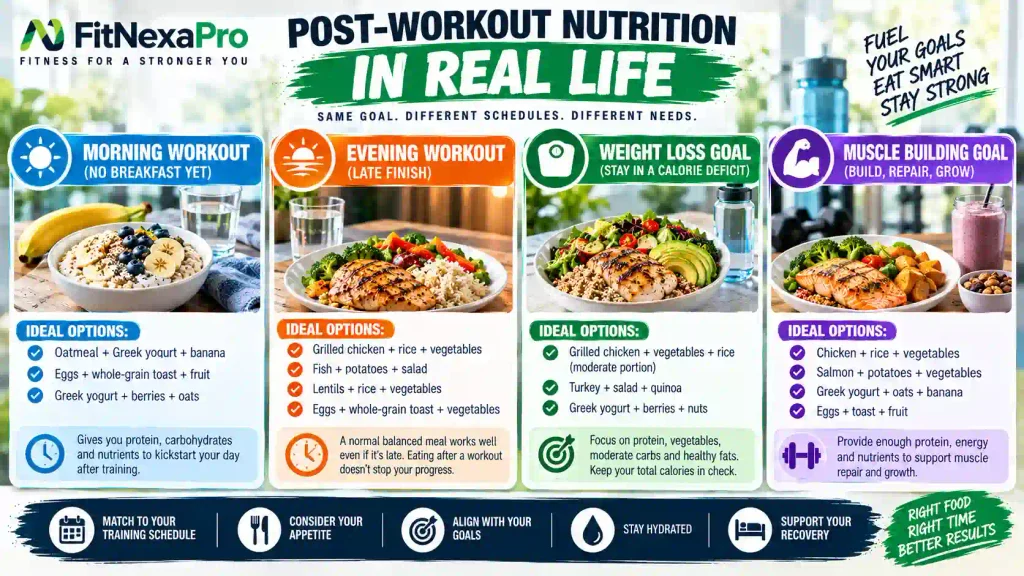
If you don’t want to think about nutrition every time you finish exercising, use this simple framework:
STEP 1: Choose Protein
Chicken, fish, eggs, Greek yogurt, milk, tofu, beans or lentils.
STEP 2: Add Carbohydrates
Rice, potatoes, oats, bread, pasta, fruit or other carbohydrate-rich foods.
STEP 3: Add Color
Vegetables or fruit.
STEP 4: Add Dietary Fat as Appropriate
Avocado, nuts, seeds, olive oil or another suitable source.
STEP 5: Drink Fluids
Start replacing fluid lost during exercise.
That’s it.
You don’t need a complicated recovery formula.
What If You Train Again Later the Same Day?
This situation is different from a person who exercises once a day.
If you have another demanding training session coming up soon, restoring carbohydrate stores and replacing fluids can become more important.
ACSM notes that post-exercise carbohydrate is particularly relevant for replenishing glycogen, while recovery needs vary according to activity and individual circumstances.
For most recreational beginners who train once per day or a few times per week, there is usually less urgency.
Your normal meals can provide much of what you need.
Recovery Is More Than Food
One important lesson is that post-workout nutrition is only one piece of recovery.
Your body also needs time to recover from training.
Important factors include:
Sleep
Quality sleep supports recovery and helps you maintain healthy eating and training habits.
Rest
Training every muscle hard every day isn’t necessary for most beginners.
Hydration
Replace fluids according to your activity and environment.
Adequate energy
Consistently eating too little can make recovery and training harder.
Progressive training
Your workout needs to provide an appropriate stimulus.
ACSM’s recovery guidance emphasizes nutrition alongside other recovery strategies rather than treating one food or nutrient as a complete solution.
The Bottom Line
So, what should you eat after a workout?
Start simple.
Choose a protein source, add carbohydrates according to your activity and energy needs, include vegetables or fruit, drink enough fluids, and make the meal fit your overall diet.
You don’t need an expensive recovery supplement.
You don’t need to panic about a tiny post-workout eating window.
And you don’t need to eat exactly the same meal after every workout.
A person completing a short beginner gym session may need nothing more complicated than their next normal balanced meal. Someone completing a long endurance session or training again later may need a more deliberate recovery strategy.
The best post-workout nutrition plan is the one that supports your training, fits your goals and is realistic enough to follow consistently.
Train consistently. Eat well. Recover properly. Repeat.