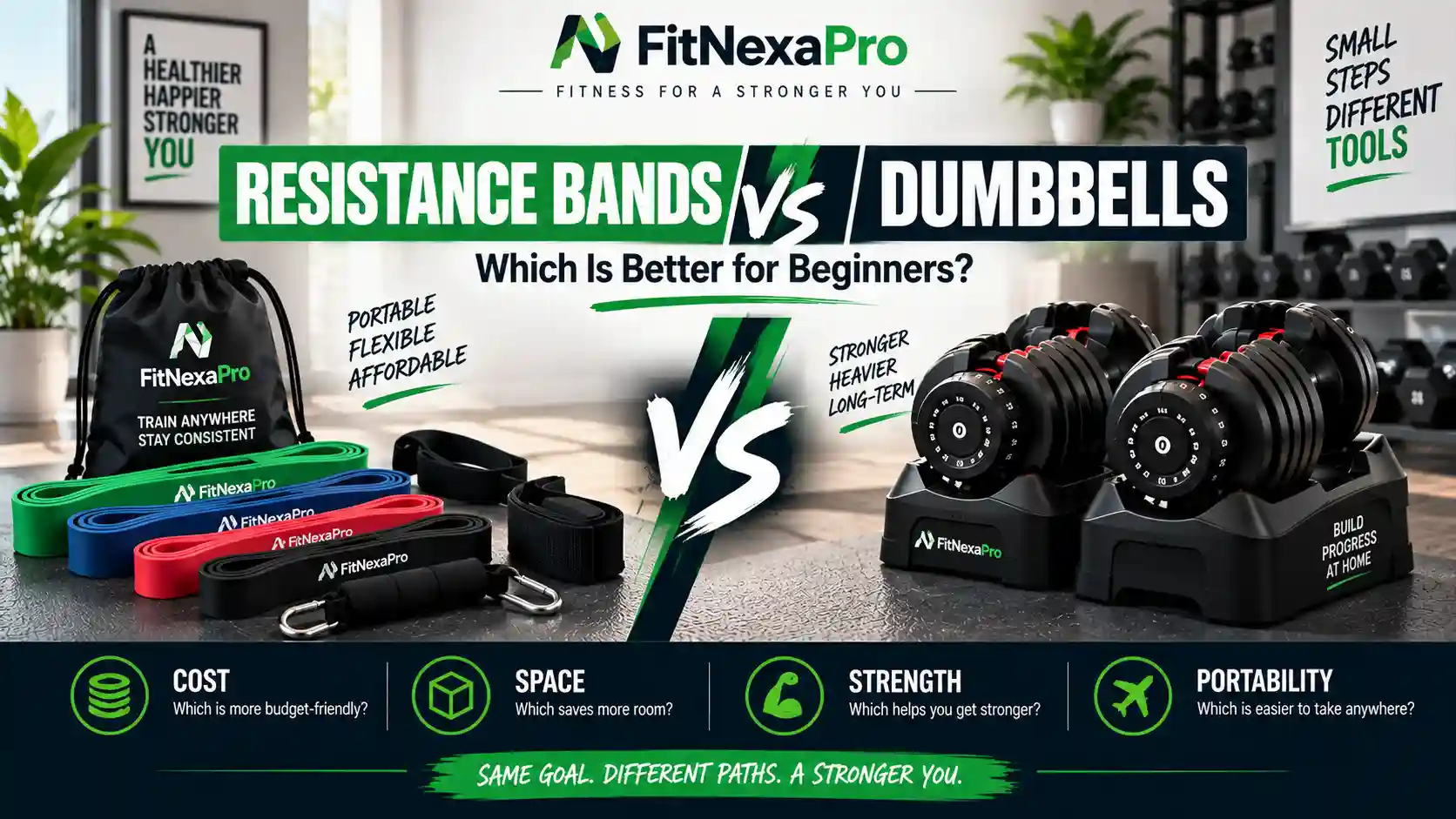
Resistance Bands vs Dumbbells: Which Is Better for Beginners?
Starting strength training at home can be surprisingly simple. You don’t need a large machine, a full dumbbell rack, or a room dedicated to fitness. For many beginners, the first useful decision is much smaller: should you buy resistance bands or dumbbells?
Both can make your muscles work against resistance, but they don’t behave in exactly the same way.
Resistance bands are lightweight, inexpensive, easy to store, and useful for a wide range of movements. Dumbbells are heavier and require more storage, but their resistance is easier to measure and they fit naturally into traditional strength-training exercises.
So when comparing resistance bands vs dumbbells, the better choice isn’t simply the one capable of giving you a harder workout. It’s the one that fits your space, budget, goals, and ability to progress.
For a beginner with almost no equipment budget or storage space, I would usually start with resistance bands. For someone primarily interested in building a long-term home strength setup, adjustable dumbbells are often the better foundation.
And for many people, the most useful answer eventually becomes: own both.
Here’s how to decide.
First, Understand How the Resistance Is Different
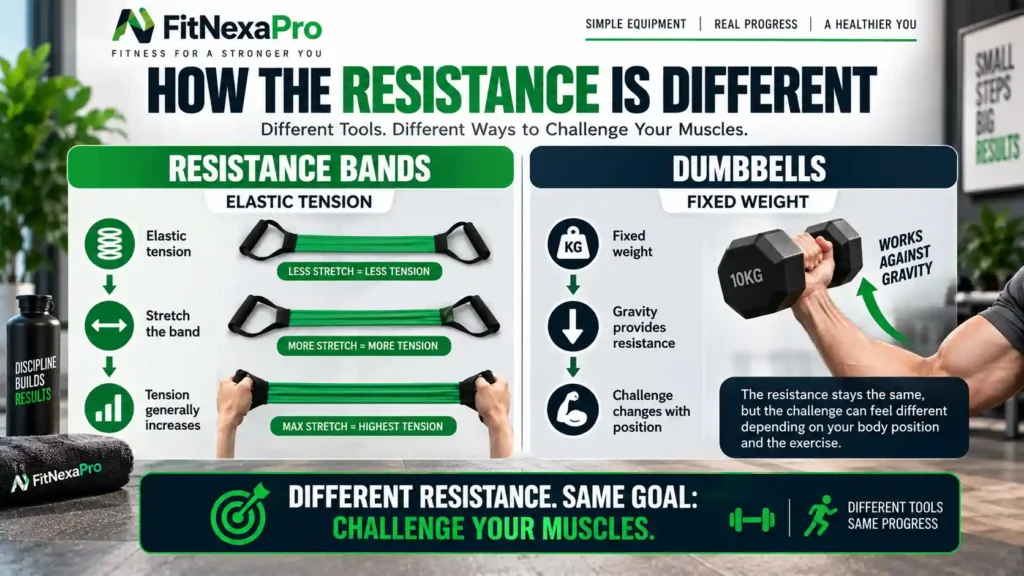
The biggest difference between these tools isn’t their appearance. It’s how they create resistance.
A dumbbell has a fixed mass. When you hold it during an exercise, gravity acts on that weight.
A resistance band works differently. It creates elastic tension as you stretch it. Generally, stretching the band farther increases its tension.
You can feel this difference during a biceps curl.
With a band anchored beneath your feet, the exercise may feel relatively easier near the beginning and increasingly difficult as the band stretches toward the top.
A dumbbell curl has a different resistance profile because the challenge changes with the position of your arm relative to gravity.
Neither system is automatically superior. They simply provide different ways of challenging your muscles.
The Quick Answer: Which Should a Beginner Buy?
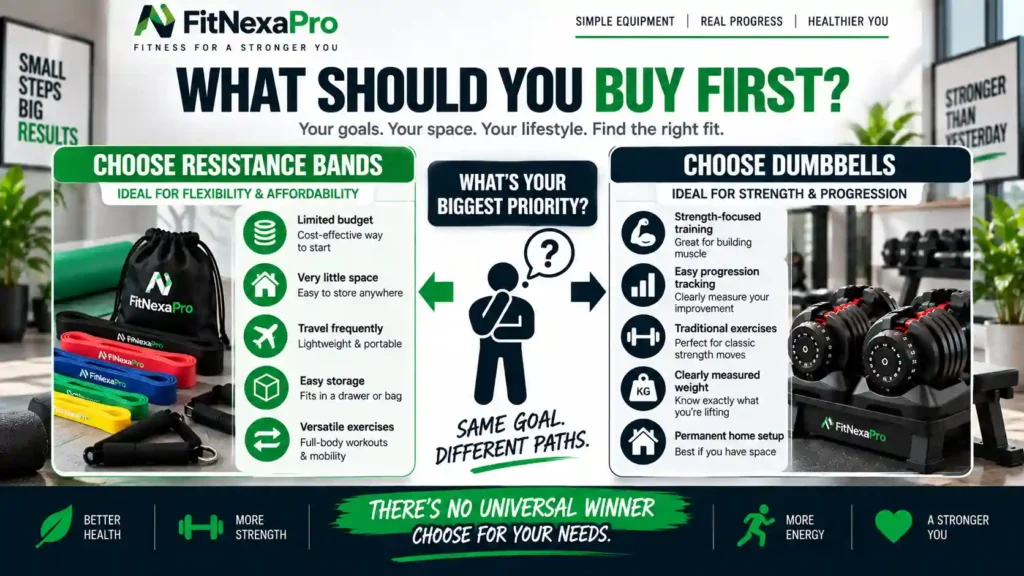
Here’s a practical way to make the decision.
Start with resistance bands if:
- Your budget is very limited
- You live in a small apartment or room
- You need equipment you can pack away
- You travel frequently
- You’re not yet sure whether you’ll stick with home workouts
Start with dumbbells if:
- Strength training is your main goal
- You want resistance that’s simple to measure
- You have somewhere safe to store weights
- You’re comfortable spending more initially
- You want a straightforward way to increase load
If neither description completely fits you, keep reading. Your answer becomes clearer once we compare how you’d actually use the equipment.
Scenario 1: You’re Starting With a Small Budget
Imagine you have only a modest amount available for your first home workout setup.
Spending all of it on one or two fixed dumbbell pairs could leave you with a problem.
A weight suitable for shoulder exercises might be too light for squats. A weight challenging enough for lower-body exercises might be too heavy for a beginner’s lateral raises.
Resistance bands can solve part of this problem inexpensively because a set commonly provides multiple resistance levels.
You can use lighter resistance for smaller muscle groups and stronger bands for exercises where you need more challenge.
Better choice: Resistance bands
For a budget-first setup, bands give you considerable exercise flexibility without requiring several separate pieces of heavy equipment.
This doesn’t mean you should continue buying increasingly complicated band systems forever. It means bands can provide an accessible starting point while you establish a regular training habit.
Scenario 2: You Have a Tiny Bedroom or Apartment
Now imagine you have enough money for either option, but nowhere to build a permanent gym.
This is where resistance bands become especially useful.
After your workout, you can put them in a drawer, cupboard, backpack, or storage box.
Dumbbells are harder to hide.
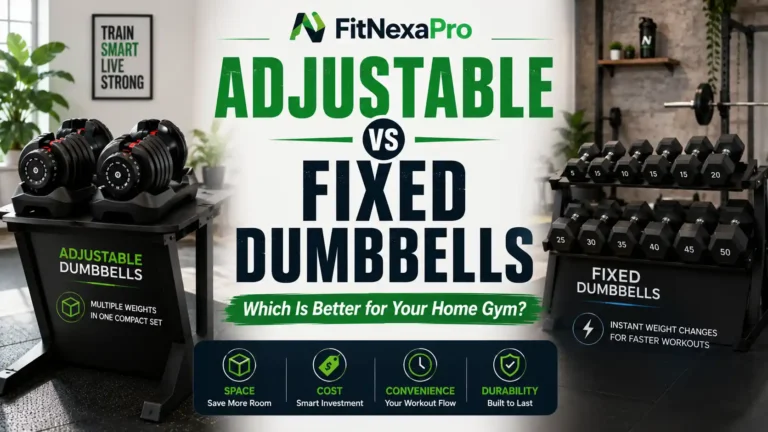
Fixed dumbbells become particularly space-hungry once you need several weights. Adjustable dumbbells solve much of that problem because a single adjustable system can replace several fixed pairs.
We compare those options separately in our Adjustable vs Fixed Dumbbells guide.
Better choice: Resistance bands
If every square metre matters, bands are difficult to beat.
If you have enough room for a small equipment stand, however, adjustable dumbbells become a realistic alternative.
Scenario 3: You Want to Get Stronger and Track Every Workout
Suppose your main goal is structured strength training.
You record your exercises and want to know exactly what you lifted each week.
Dumbbells make this straightforward.
For example:
Week 1: 8 kg × 10 repetitions
Week 2: 8 kg × 12 repetitions
Later: 10 kg × 8 repetitions
That gives you an easily understood record of external load.
Progress with resistance bands can also be tracked, but you need to control more variables.
You might record:
- Band resistance
- Where you’re standing on the band
- Anchor position
- Starting length
- Repetitions
- Sets
Changing how much the band is stretched can change the resistance even when you’re using the same band.
Better choice: Dumbbells
For beginners who enjoy tracking numbers and following a structured strength program, dumbbells generally provide the simpler system.
Scenario 4: You Travel Regularly
This one isn’t close.
You probably aren’t putting 30 kg of dumbbells into your suitcase.
A small set of resistance bands can travel almost anywhere.
They won’t reproduce every exercise you’d perform in a fully equipped gym, but they can give you resistance options when you’re away from your normal setup.
Better choice: Resistance bands
Even someone who primarily trains with dumbbells at home may find bands worth owning purely because of their portability.
What Can You Actually Train With Resistance Bands?
A useful piece of equipment should solve real workout problems, not simply look good in your home gym.
With appropriate band types and setups, you can perform variations of:
Back: rows and pulldown-style movements.
Chest: presses and some fly variations.
Shoulders: presses, raises, and accessory movements.
Arms: curls and triceps extensions.
Legs: squat variations and other resisted lower-body movements.
Glutes: lateral walks, abductions, bridges, and similar exercises.
Bands can also be useful during warm-ups and mobility work.
The exact exercises available depend on the type of band you own and whether you have an appropriate anchor point.
That last detail matters.
Buying bands without thinking about where or how you’ll anchor them can make some exercises much less practical.
What Can You Train With Dumbbells?
Dumbbells are similarly versatile.
A basic pair can be used for movements such as:
- Goblet squats
- Romanian deadlifts
- Lunges
- Floor presses
- Bench presses
- One-arm rows
- Shoulder presses
- Lateral raises
- Biceps curls
- Triceps exercises
With enough resistance, you can create a substantial full-body training routine around dumbbells.
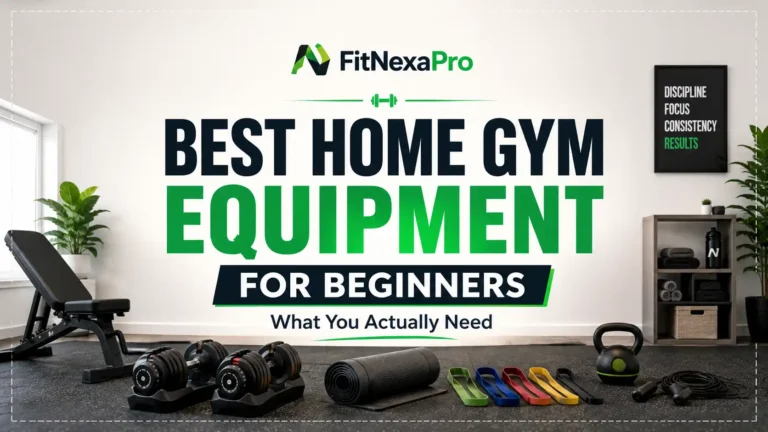
This is one reason we included adjustable dumbbells among the core options in our Best Home Gym Equipment for Beginners guide.
A bench can expand the exercise selection further, but beginners don’t necessarily need one immediately.
Can Resistance Bands Actually Build Muscle?
Resistance bands shouldn’t be dismissed as equipment used only for stretching.
They can provide meaningful resistance.
What matters is whether your exercise is challenging enough for your current ability and whether you can continue progressing your training rather than repeating an easy routine indefinitely.
The same principle applies to dumbbells.
Owning a 5 kg dumbbell doesn’t automatically build muscle. If that resistance eventually becomes too easy for the exercise and nothing changes, your training stimulus may become insufficient for continued progress.
The equipment is only the tool.
Your training is what determines how that tool is used.
Resistance training can be performed using different forms of resistance, and consistent progressive training is more important than relying on one particular piece of equipment. For additional evidence-based guidance on resistance training, see the American College of Sports Medicine’s resistance training recommendations.
Where Dumbbells Have a Long-Term Advantage
For traditional strength training, dumbbells offer one particularly useful feature:
load is obvious.
Moving from a 10 kg dumbbell to a 12 kg dumbbell is a clear increase.
This becomes valuable as your training becomes more structured.
Dumbbells can also provide considerably heavier resistance if you buy a system with an appropriate weight range.
That’s important because beginners get stronger.
When shopping for home equipment, don’t only ask:
“Is this enough for me today?”
Ask:
“Can I progress with this six or twelve months from now?”
This applies especially to adjustable dumbbells. Check the maximum weight and available increments rather than choosing solely based on appearance or price.
Where Resistance Bands Have an Advantage Dumbbells Can’t Match
Bands can create resistance from different directions.
A dumbbell relies heavily on gravity. A band can potentially be anchored in front of you, behind you, above you, or lower down, depending on the exercise and safe anchor setup.
That opens up movement possibilities that aren’t always convenient with dumbbells alone.
This is why I don’t view resistance bands simply as a cheaper version of dumbbells.
They’re a different training tool.
Even after purchasing dumbbells, you may continue using bands for accessory exercises, warm-ups, lateral movements, and exercises requiring a different line of resistance.
A Practical Beginner Setup
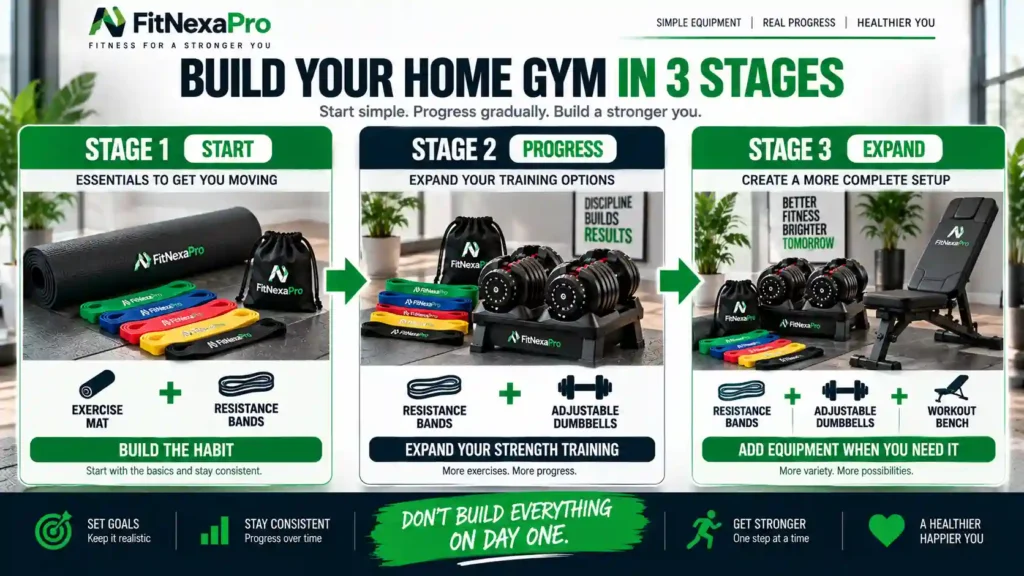
Here’s where I think this comparison becomes most useful.
Suppose you’re building your first home gym from nothing.
I wouldn’t recommend buying ten different pieces of equipment immediately.
Stage 1: Start simple
Begin with:
- Exercise mat
- Set of resistance bands
Use these while you learn basic movements and establish a regular training routine.
Stage 2: Add adjustable dumbbells
If strength training becomes something you’re doing consistently, adjustable dumbbells can significantly expand your options.
Now you have measurable free weights plus bands.
Stage 3: Add equipment only when there’s a reason
A bench may be the next useful purchase.
Later, depending on your goals and available space, you might consider heavier weights or other equipment.
The important point is that your gym should grow because your training requires it, not because social media makes a piece of equipment look essential.
Three Buying Mistakes Beginners Should Avoid
1. Buying Only One Resistance Level
Your legs, shoulders, back, and arms aren’t equally strong.
Whether you’re buying bands or dumbbells, having access to different resistance levels gives you more flexibility.
2. Choosing Equipment You’ll Quickly Outgrow
A very light dumbbell pair might be useful initially but could soon become inadequate for stronger movements.
Think about progression before purchasing.
3. Buying Equipment Before Planning Your Exercises
Decide what you actually want to do first.
Write down perhaps 6–10 exercises you’d like to perform at home. Then determine which equipment allows you to perform those movements safely and conveniently.
That’s much smarter than buying equipment first and trying to invent a use for it later.
Safety: There’s One Important Difference
Dumbbells and resistance bands have different risks.
With dumbbells, you need to consider the physical weight itself. Use controlled movements, maintain a secure grip, and don’t select a load you can’t safely handle.
Bands require inspection.
Elastic material can deteriorate. Before training, check your bands for cracks, tears, damaged handles, weakened seams, or other visible deterioration.
Also pay attention to anchor points.
Don’t attach a resistance band to something unstable simply because it happens to be nearby.
If a band, handle, or anchor fails while under tension, it can snap back toward you.
Follow the manufacturer’s instructions for the specific equipment you own.
What I Would Choose With Three Different Budgets
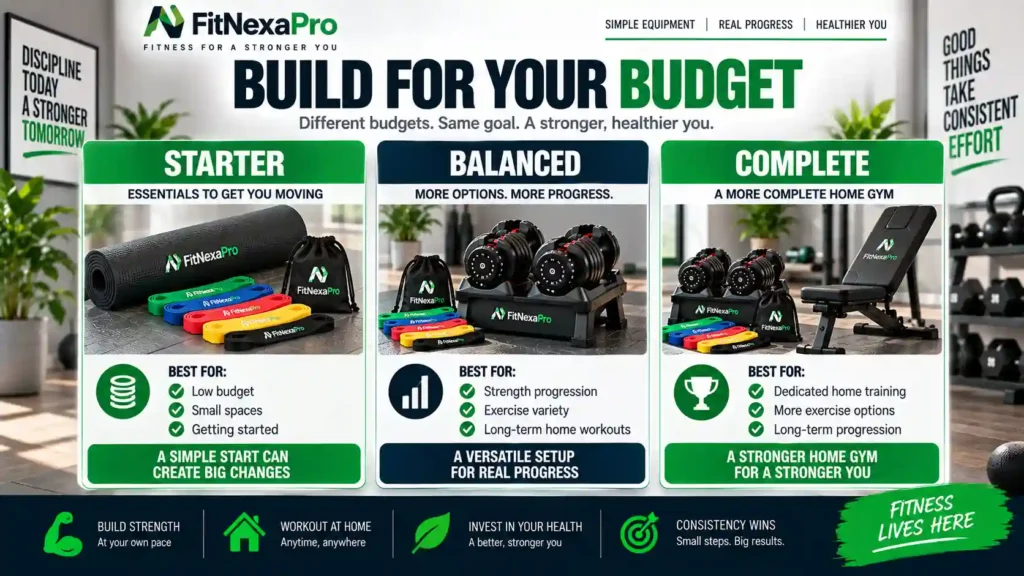
Rather than pretending everyone needs the same setup, here’s how I’d approach three situations.
Very limited budget:
Buy a quality set of resistance bands and an exercise mat. Build the habit first.
Moderate budget:
Buy resistance bands plus adjustable dumbbells with enough weight range to support progression.
Larger home-gym budget:
Start with adjustable dumbbells, bands, and a quality bench before considering larger equipment.
Notice what’s missing:
A room full of machines.
Most beginners don’t need to purchase everything at once.
Resistance Bands vs Dumbbells: The Final Decision
So, which is actually better for beginners?
For someone completely new to home workouts with limited money and space, my recommendation is resistance bands.
They’re inexpensive, easy to store, portable, and versatile enough to help you begin resistance training without committing to a large home-gym setup.
For someone who already knows that strength training will be a major part of their routine, I would lean toward adjustable dumbbells.
They’re easier to track, familiar to use, and provide a clear path for increasing external resistance.
But if you’re building a long-term home gym, I wouldn’t necessarily choose one forever.
Resistance bands + adjustable dumbbells is a much more versatile combination than either tool by itself.
Start with the equipment that solves your biggest problem today. Add the second only when your workouts give you a reason to.
A useful home gym isn’t the one with the most equipment.
It’s the one you actually train in.