
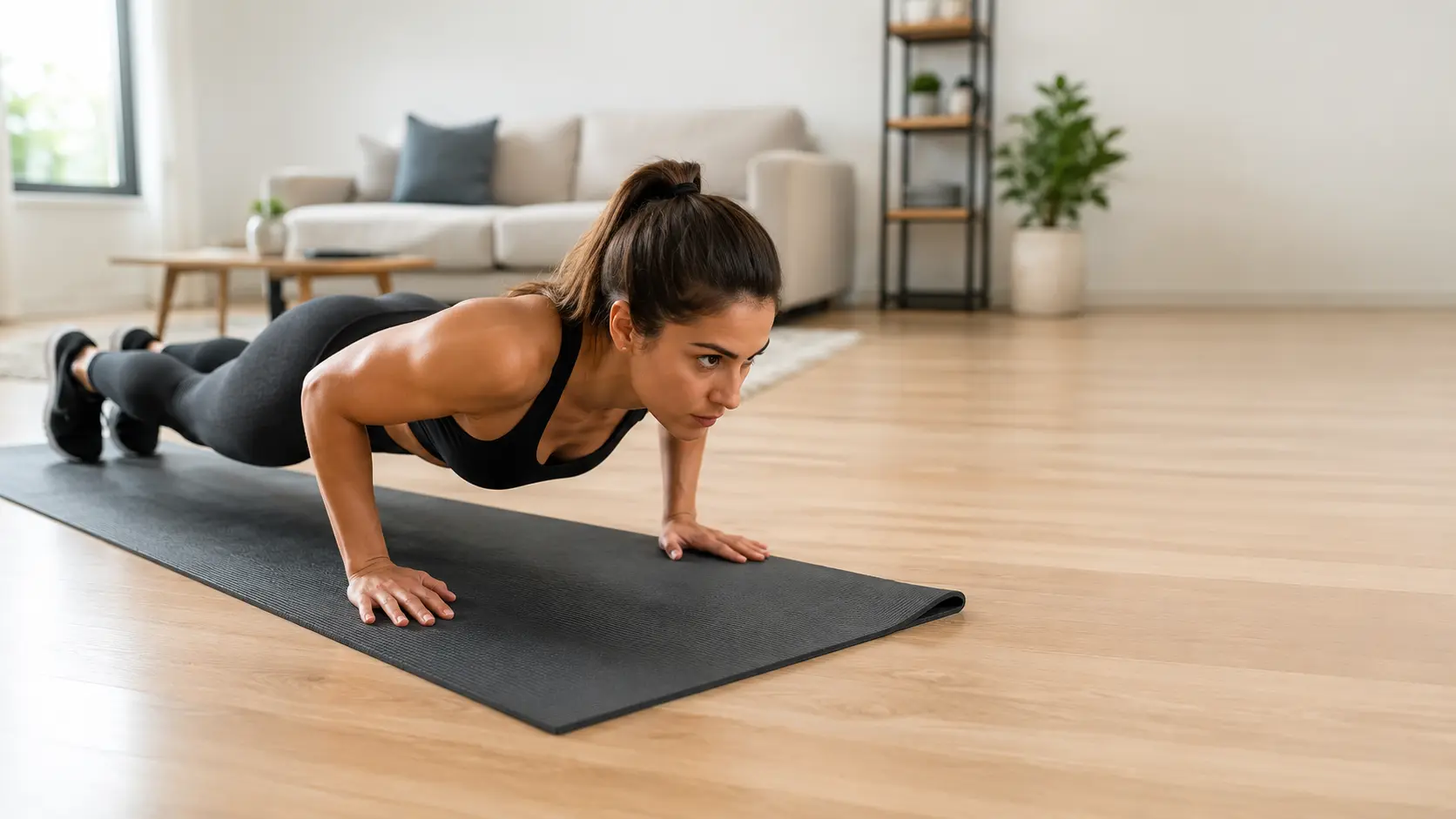
5 Beginner Home Workouts You Can Do Without Equipment
Beginner home workouts are a simple way to start exercising without joining a gym or buying expensive equipment. If you are new to fitness, you can use your own bodyweight to build strength, improve your fitness and develop a regular exercise habit.
You do not need to spend hours working out either. With a few simple exercises and around 20 to 30 minutes, you can create a practical home workout that fits into your day.
In this guide, we will look at five beginner friendly exercises you can do at home with little or no equipment. We will cover bodyweight squats, push ups, glute bridges, planks and walking lunges, along with simple tips to help you get started.
Benefits of Beginner Home Workouts
Home workouts can be a great starting point because they remove some of the barriers that stop people from exercising.
You do not have to drive to a gym or wait for equipment. You can exercise before work, after work, or whenever you have a few free minutes. You can also start at your own pace without worrying about how much weight someone else is lifting.
For beginners, learning proper movement and developing consistency are more important than trying to do extremely difficult workouts.
Bodyweight exercises can also help you understand how your body moves before you start using weights or more advanced equipment.
If you are completely new to exercise, start slowly. You do not need to complete a hard workout every day. Two or three sessions per week can be a reasonable starting point for many beginners.
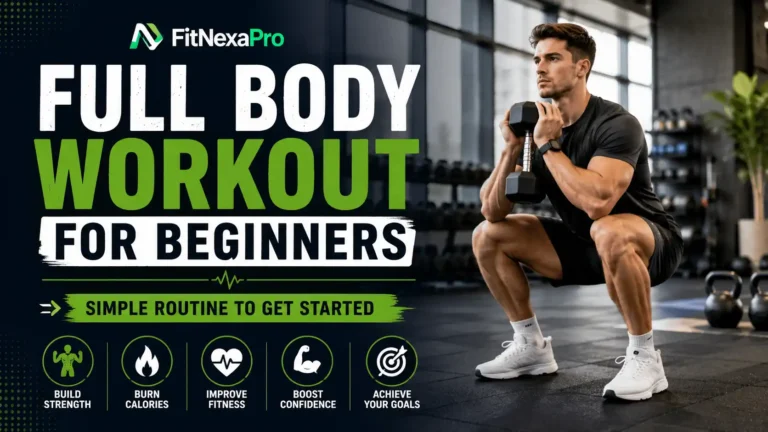
1. Bodyweight Squats
The bodyweight squat is one of the simplest exercises to include in a beginner home workout.
Squats primarily work the muscles in your legs and glutes while also requiring your core to help stabilize your body. The movement is also similar to everyday activities such as sitting down and standing up.
How to Do a Bodyweight Squat
Stand with your feet around shoulder width apart. Keep your chest comfortably upright and look straight ahead.
Push your hips backward and bend your knees as you lower your body. Think about sitting back toward a chair.
Lower yourself only as far as you can while maintaining good control and a comfortable position. Then push through your feet to return to the starting position.
Keep your movements controlled rather than trying to complete the exercise as quickly as possible.
Beginner Target
Start with 3 sets of 10 to 15 repetitions.
If 10 repetitions feel difficult, start with fewer repetitions and gradually increase them as you become more comfortable.
Beginner Tip
If balance is a problem, practice squatting toward a chair. You can lightly touch the chair before standing back up.
2. Push Ups
Push ups are a classic bodyweight exercise because they train several muscles at the same time. They primarily work your chest, shoulders and triceps while your core helps keep your body stable.
However, standard push ups can be challenging when you are just starting out. There is nothing wrong with modifying the exercise.
You can begin with knee push ups or another easier variation and gradually work toward standard push ups.
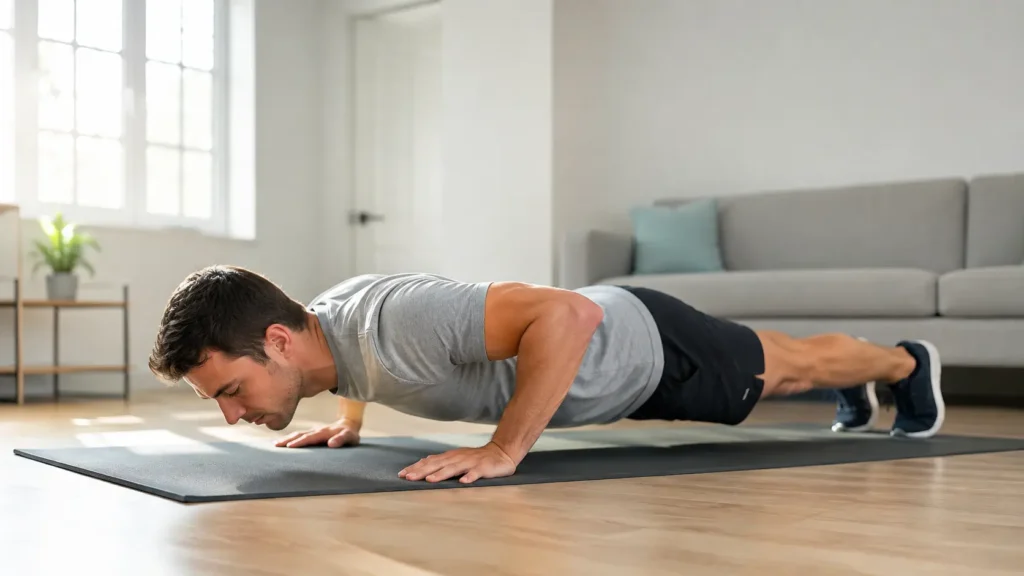
How to Do a Push Up
Place your hands on the floor slightly wider than your shoulders.
Extend your legs behind you if you are doing a standard push up. Keep your body in a relatively straight line from your head to your heels.
Bend your elbows and lower your chest toward the floor while keeping your body controlled. Stop at a comfortable depth, then push through your hands to return to the starting position.
If you are doing knee push ups, keep your knees on the floor while maintaining good control throughout the movement.
Beginner Target
Try 3 sets of 5 to 10 repetitions.
If you cannot complete five standard push ups with good form, use an easier variation. The goal is to build strength gradually rather than forcing yourself through repetitions with poor technique.
Beginner Tip
Quality matters more than the number on the workout plan. Five controlled repetitions are more useful than trying to rush through fifteen repetitions with poor form.
3. Glute Bridges
Glute bridges are a useful beginner exercise for strengthening the muscles around your hips and glutes. They are also easy to perform at home because you only need enough floor space to lie down.
This exercise can be especially useful for beginners who are not yet comfortable with more demanding lower body movements.
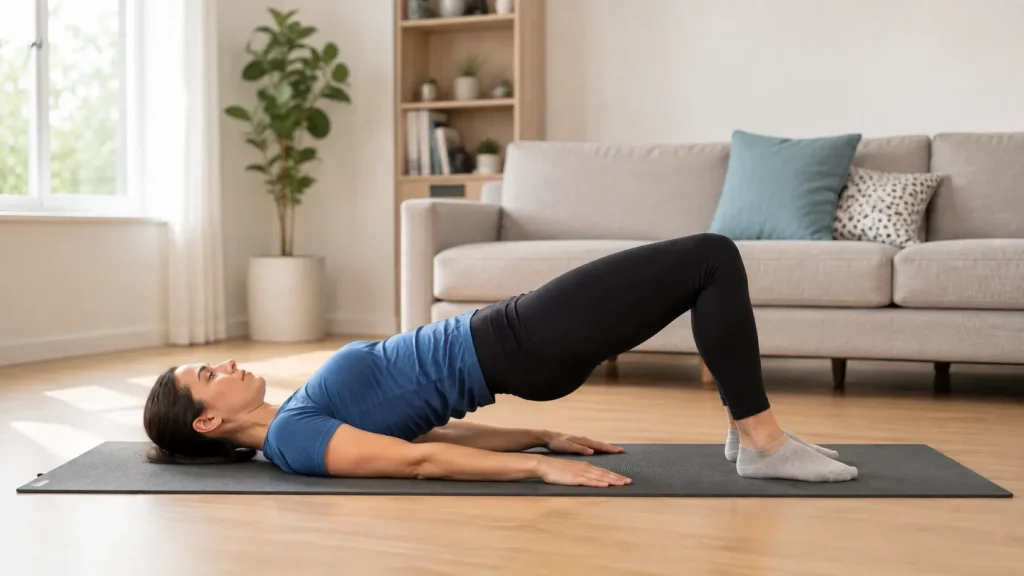
How to Do a Glute Bridge
Lie on your back with your knees bent and your feet flat on the floor.
Place your feet roughly hip width apart and keep your arms resting beside your body.
Press your feet into the floor and lift your hips upward. At the top of the movement, gently squeeze your glutes.
Pause briefly, then lower your hips back toward the floor in a controlled manner.
Avoid turning the exercise into a fast bouncing movement. The controlled movement is what you want to practice.
Beginner Target
Complete 3 sets of 12 to 15 repetitions.
As you get stronger, you can gradually increase the challenge by adding repetitions, holding the top position for a few seconds, or eventually progressing to more advanced variations.
Beginner Tip
Think about lifting your hips using your glutes rather than simply pushing your stomach upward.
4. Plank
The plank is a simple exercise that can challenge your core while also requiring your shoulders, back and glutes to help stabilize your body.
Unlike exercises where you perform many repetitions, the plank is usually performed by holding a position for a period of time.
You do not need to hold a plank for several minutes to benefit from practicing it. Beginners can start with short holds and build gradually.
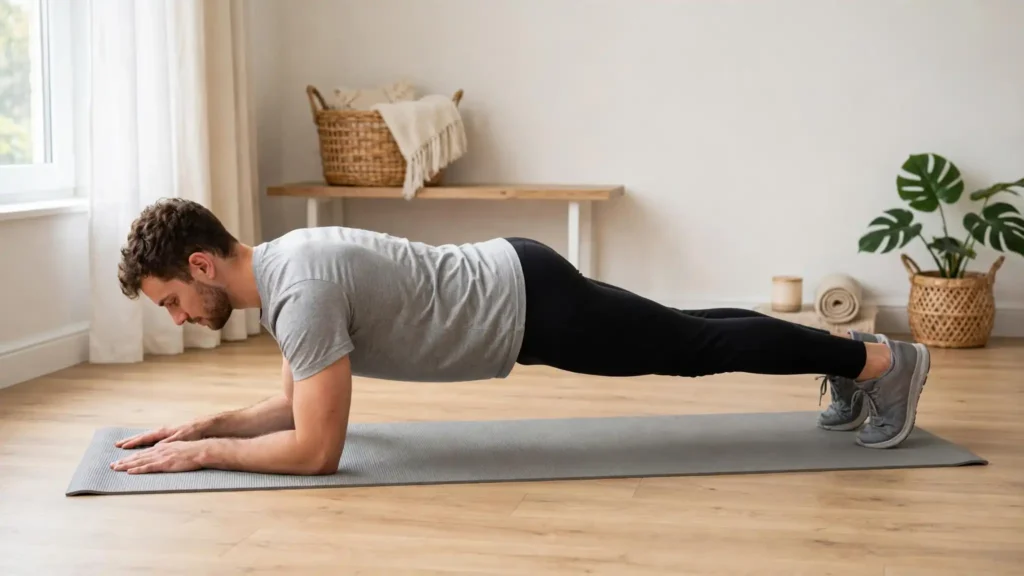
How to Do a Plank
Start in a push up position and then lower yourself onto your forearms.
Keep your elbows underneath or close to your shoulders. Extend your legs behind you and keep your body in a straight line.
Tighten your core gently and avoid allowing your hips to drop toward the floor.
You also do not need to push your hips excessively high. Try to maintain a comfortable, controlled position throughout the hold.
Beginner Target
Start with 3 sets of 20 to 30 seconds.
If 20 seconds is too difficult, begin with a shorter hold. You can gradually add time as your strength and control improve.
Beginner Tip
Do not worry about holding the plank for a long time. Good positioning is more important than trying to beat a personal record every workout.
5. Walking Lunges
Walking lunges are a lower body exercise that can challenge one leg at a time. They can help you practice balance, coordination and control while working your legs and glutes.
Because lunges require more balance than squats, beginners may want to start slowly.
If you do not have enough room to perform walking lunges, you can perform stationary reverse or forward lunges instead.
How to Do a Walking Lunge
Stand tall with your feet comfortable apart.
Take a step forward with one leg and slowly lower your body. Your knees should bend as you lower yourself, while your front foot stays planted on the floor.
Push through your front foot to stand and bring your other leg forward into the next repetition.
Keep your movements controlled and use a smaller range of motion if you are still learning the exercise.
Beginner Target
Start with 3 sets of 8 to 10 lunges per leg.
If you find it difficult to maintain your balance, perform the exercise next to a wall or another stable surface that you can use for support.
A Simple Beginner Home Workout
Now that you know the five exercises, you can put them together into a simple routine.
Perform this workout around 2 to 3 times per week, allowing your body time to recover between sessions.
Bodyweight squats: 3 sets of 12
Push ups: 3 sets of 8
Glute bridges: 3 sets of 15
Plank: 3 sets of 25 seconds
Walking lunges: 3 sets of 10 per leg
Rest around 30 to 60 seconds between sets. You can take longer if you need it, especially when you are new to exercise.
The numbers above are a starting point, not a requirement that you must follow perfectly.
If you can only complete six push ups instead of eight, that is completely fine. If you need more rest between sets, take it. Your first goal should be learning the movements and building a routine that you can actually maintain.
How to Make Your Home Workout More Difficult
Eventually, the same workout may start to feel easier. That is a good sign because it means your body is adapting.
You do not immediately need to buy equipment or completely change your workout.
You can first increase the number of repetitions slightly. You can also add another set, slow down the movement, or pause briefly during the most challenging part of an exercise.
For example, instead of performing a quick squat, take a few seconds to lower yourself and then stand back up with control.
Another option is to use more challenging exercise variations once you have developed enough strength and control.
The important thing is to progress gradually. Doing more is not always better if your form starts to break down.
Common Mistakes Beginners Should Avoid
One of the biggest mistakes beginners make is trying to do too much too soon.
You may feel motivated when you start a new fitness routine and want to exercise every day. But if your body is not used to regular exercise, suddenly doing intense workouts can leave you extremely sore and make it harder to stay consistent.
Another common mistake is focusing too much on repetitions.
Completing 20 repetitions does not automatically make a workout better than completing 10 repetitions. Your technique, control and ability to recover also matter.
It is also important not to compare your starting point with someone who has been exercising for years.
Your fitness journey is your own. The goal is to become stronger and more comfortable with exercise over time.
How Often Should Beginners Work Out?
There is no single schedule that works for everyone.
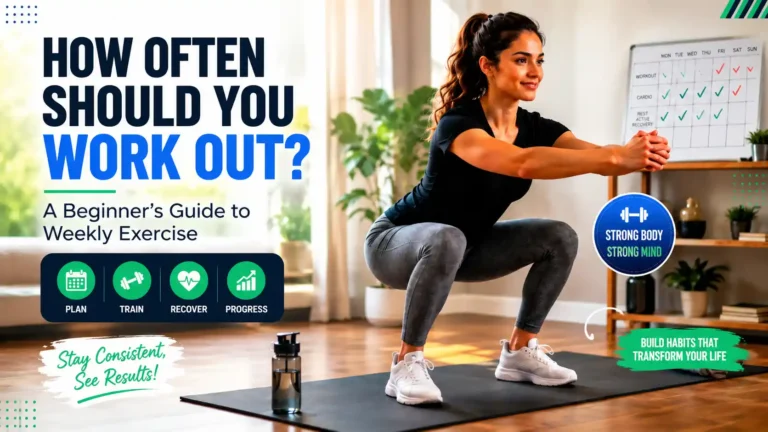
For someone who is just starting, two or three strength focused home workouts per week can be a practical way to build consistency. You can also include other forms of movement, such as walking, cycling or recreational activities, depending on your fitness level and preferences.
Recovery is part of training too.
Your muscles and body need time to adapt to new physical demands. If you are very sore or unusually tired, give yourself additional recovery time instead of forcing yourself through another difficult session.
As your fitness improves, you can gradually adjust your routine.
For general physical activity guidance, you can also refer to the World Health Organization’s recommendations on physical activity
How to Stay Consistent With Home Workouts
The best workout routine is often the one you can stick with.
You do not need to wait until you have a completely free hour. A short workout can still be worthwhile, especially when your alternative is doing nothing.
Try choosing specific days and times for your workouts. For example, you might exercise on Monday, Wednesday and Friday.
Keeping your workout simple can also make it easier to stay consistent. You already know the five exercises, so you do not have to spend twenty minutes deciding what to do before you begin.
Track your progress if that motivates you. You can write down your repetitions and plank times and check them again after a few weeks.
Small improvements can be encouraging.
Maybe you started with five push ups and eventually reached ten. Maybe you could only hold a plank for 15 seconds and can now comfortably hold it for 30 seconds.
Those changes are worth noticing.
Final Thoughts
You do not need a gym membership or expensive equipment to begin exercising.
Bodyweight squats, push ups, glute bridges, planks and walking lunges give beginners a simple way to work on strength, balance and general fitness at home.
The most important part is not completing the perfect workout. It is creating a routine that you can realistically continue.
Start with manageable amounts of exercise, learn the movements, give yourself time to recover and gradually increase the challenge as you become stronger.
If you want to understand your current measurements and set more realistic fitness goals, you can also use the free BMI Calculator and Calories Calculator available on FitNexaPro.
Remember that exercise recommendations can vary depending on your age, fitness level and health history. If you have a medical condition, an injury, or concerns about starting exercise, speak with a qualified healthcare professional before beginning a new workout program.
Frequently Asked Questions
Can I build strength with home workouts?
Yes. Bodyweight exercises can help beginners develop strength, particularly when the exercises are performed consistently and gradually made more challenging.
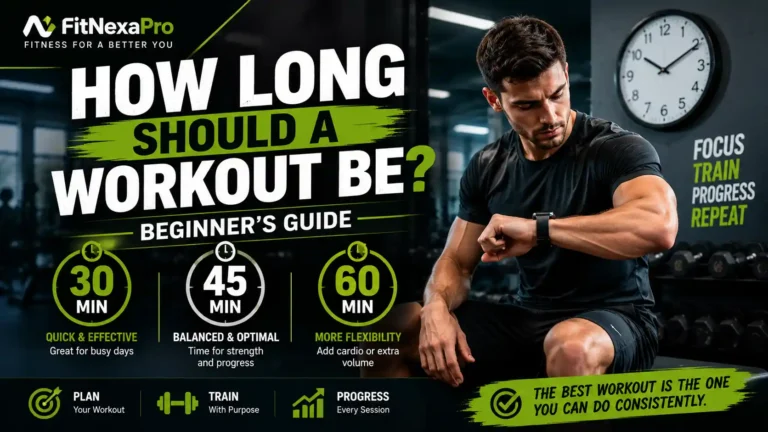
How long should a beginner home workout be?
A beginner workout does not need to be very long. Around 20 to 30 minutes can be enough for a simple routine when you focus on a few effective exercises.
How many days a week should a beginner exercise?
Two or three strength focused workouts per week can be a practical starting point for many beginners. Your schedule, fitness level and recovery needs should also be considered.
Can I do these exercises every day?
You do not necessarily need to perform the full workout every day. Beginners should give their bodies enough time to recover, particularly after strength focused sessions.
What should I do if I cannot perform a standard push up?
Start with an easier variation such as knee push ups. You can gradually work toward standard push ups as your strength and control improve.
Do I need equipment for a home workout?
No. The five exercises in this routine can be performed without traditional workout equipment. A comfortable exercise mat can make floor exercises more comfortable, but it is not essential.
Is a short workout better than no workout?
If a short workout is all you have time for, it can be a practical way to stay active. Building a consistent habit is often more useful than waiting for the perfect amount of free time.
Disclaimer: This article is provided for general informational and educational purposes only. It is not a substitute for medical advice, diagnosis or individualized fitness guidance. If you have a health condition, injury, or concerns about starting a new exercise program, consult an appropriate healthcare professional before exercising.
2 Comments