

How Often Should You Work Out? A Beginner’s Guide to Weekly Exercise
If you are new to exercise, one of the first questions you may have is how often should you work out? Should you exercise every day, three times a week, or only when you have free time?
There is no single schedule that works perfectly for everyone. Your current fitness level, daily routine, goals and ability to recover all matter.
For most beginners, the goal should not be to exercise as much as possible. It should be to find a routine that is realistic enough to follow consistently.
You might start with two or three workouts each week and add regular walking or other activities on the days between them. As exercise becomes part of your routine, you can gradually increase the amount you do.
The important thing is to start at a level you can manage rather than trying to change everything overnight.
How Often Should Beginners Work Out?
For someone who is just getting started, two or three structured workouts per week can be a practical starting point.
You could exercise on Monday, Wednesday and Friday, giving yourself a day between workouts. Another option is to work out on Tuesday and Saturday if that fits your schedule better.
There is no special reason you have to exercise on particular days. The best schedule is one that fits into your normal week.
If you are currently doing very little physical activity, you can start even smaller. A couple of short workouts combined with regular walking can be enough to begin building the habit.
As your fitness improves, you can gradually increase the duration or frequency of your workouts.
If you want more guidance on getting started, read our guide on how to start exercising.
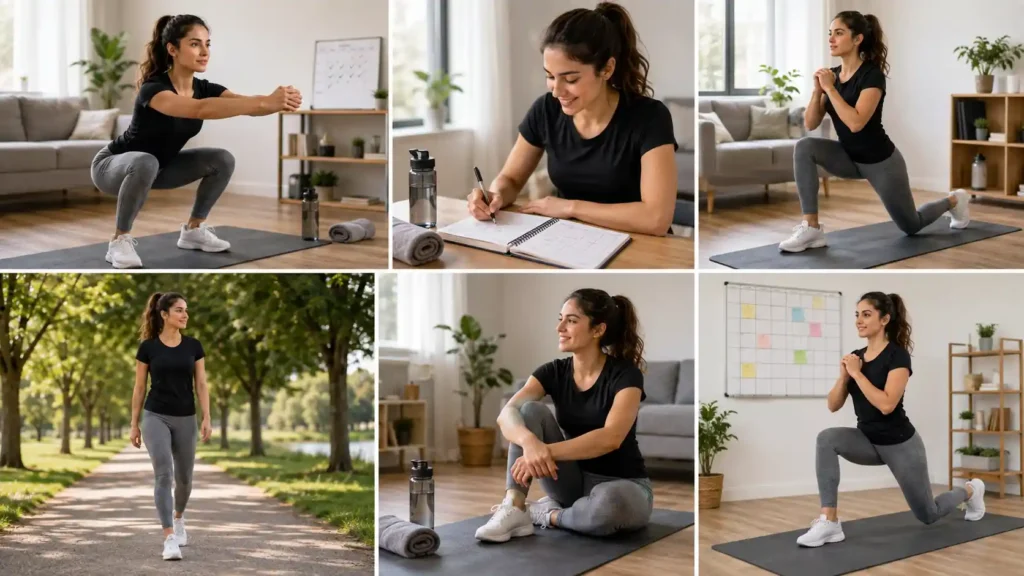
How Many Days a Week Should You Exercise?
The answer depends on what type of exercise you are doing.
Strength training and cardio place different demands on your body, so your weekly routine does not have to look the same every day.
A beginner might use a simple schedule such as:
Monday: Full body strength workout
Tuesday: Easy walk
Wednesday: Rest or light activity
Thursday: Full body strength workout
Friday: Easy walk
Saturday: Optional activity
Sunday: Rest
This is only an example. You can move the days around based on your work, family and other responsibilities.
The goal is to create a routine that you can actually maintain.
What Do Health Guidelines Recommend?
For adults, the World Health Organization recommends at least 150 to 300 minutes of moderate intensity aerobic physical activity per week, or 75 to 150 minutes of vigorous activity, or an equivalent combination of the two. It also recommends muscle strengthening activities involving the major muscle groups on at least two days per week.
That does not mean a beginner needs to jump straight into the full recommendation.
If you are currently inactive, starting with smaller amounts and gradually increasing your activity is a sensible approach. WHO also notes that some physical activity is better than none.
These recommendations are for general adult populations. Individual needs can be different, especially if you have an injury, medical condition or other health concern.
How Often Should You Do Strength Training?
If your goal is to become stronger, strength training should be part of your weekly routine.
Beginners do not necessarily need to lift weights every day. In fact, giving your body time to recover between challenging strength workouts can make your routine easier to manage.
You can start with two full body strength sessions per week.
A simple home workout could include:
Bodyweight squats
Push ups
Glute bridges
Planks
Lunges
You can find more detailed instructions for these exercises in our guide to beginner home workouts.
As you become stronger, you can gradually increase repetitions, sets or exercise difficulty.

How Often Should You Do Cardio?
Cardio includes activities that raise your heart rate, such as walking, cycling, swimming, jogging and many sports.
You do not need to run every day to improve your activity level.
For beginners, walking can be an easy way to add more movement without making your routine unnecessarily complicated.
You might start with a 20 to 30 minute walk several times per week.
As your fitness improves, you can make the walks longer, increase your pace or try another activity you enjoy.
The important thing is to choose something you can continue doing.
Can You Work Out Every Day?
You can be physically active every day, but that does not mean every day needs to be a hard workout.
There is a big difference between taking a relaxed walk and doing a demanding strength training session.
You could have a week that includes strength workouts, walking, mobility work and rest days.
For example:
Monday: Strength workout
Tuesday: Walking
Wednesday: Strength workout
Thursday: Easy walking
Friday: Strength workout
Saturday: Recreational activity
Sunday: Rest
This gives you movement throughout the week without making every day intense.
If you notice that you are constantly tired, unusually sore or struggling to recover between workouts, it may be a sign that you need more recovery.
Why Rest Days Matter
Rest days are not wasted days.
Your body needs time to recover from physical activity, especially when you are doing exercises that challenge your muscles.
Taking a rest day does not mean you have to stay completely inactive. You can take an easy walk, spend time doing normal daily activities or simply relax.
For beginners, rest can also make exercise easier mentally.
If every workout leaves you exhausted, you may eventually start looking for reasons to skip it.
A routine that includes recovery is often easier to maintain over the long term.
How Long Should Each Workout Be?
Your workouts do not need to last an hour.
A beginner can often get started with around 20 to 30 minutes of structured exercise.
For example, you could spend a few minutes warming up, complete a simple strength routine for 15 to 20 minutes and then slow down for a few minutes at the end.
Some days you may have more time. Other days you may have less.
Try not to think that a workout only counts if it lasts a certain amount of time.
If you only have 15 minutes available, you can still use that time to move.
Consistency is more useful than waiting for the perfect schedule.
What If You Are Very Busy?
A busy schedule is one of the most common reasons people struggle to exercise consistently.
Instead of trying to find a completely free hour, look for smaller spaces in your day.
You could walk during your lunch break.
You could do a short workout before taking a shower.
You could take the stairs when practical.
You could go for a walk after dinner.
You could also split your activity into smaller sessions during the day.
This can make exercise feel less like another major task on your to do list.
How Often Should You Work Out for Weight Loss?
If your goal is weight management, exercise can be one part of the bigger picture.
There is no specific number of weekly workouts that guarantees weight loss.
Your overall food intake, activity level, sleep, genetics and other factors can all influence changes in body weight.
Instead of focusing only on how many times you exercise, think about your overall activity during the week.
Regular walking combined with strength training and other enjoyable activities can help you create a more active lifestyle.
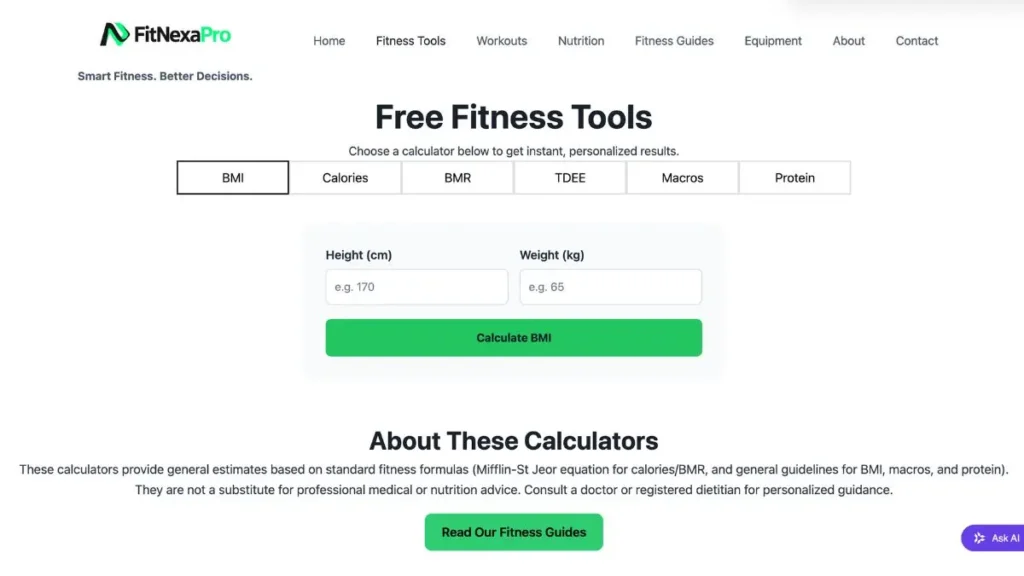
If you are tracking your measurements, our BMI Calculator can provide a general BMI estimate. Keep in mind that BMI is a screening measure and does not describe every aspect of an individual’s health or body composition.
How Often Should You Work Out to Build Muscle?
Building muscle requires more than simply exercising frequently.
Your muscles need an appropriate training stimulus, enough recovery and adequate nutrition.
Beginners can make progress with relatively simple strength routines performed consistently.
You do not need to train the same muscle group intensely every day.
A full body routine two or three times per week can be a straightforward starting point for someone new to strength training.
As you gain experience, you may choose to use a more structured program based on your goals.
A Simple Beginner Workout Schedule
If you are not sure where to start, try this basic weekly structure.
Monday: Full Body Workout
Perform a simple bodyweight routine with exercises such as squats, push ups, glute bridges and planks.
Tuesday: Walking
Take an easy to moderate walk for around 20 to 30 minutes.
Wednesday: Rest
Give your body a chance to recover.
Thursday: Full Body Workout
Repeat your strength routine and focus on controlled movements.
Friday: Walking
Take another comfortable walk or choose another light activity you enjoy.
Saturday: Optional Activity
You could go cycling, swimming, hiking, play a sport or simply take a longer walk.
Sunday: Rest
Use the day to recover and prepare for the following week.
You do not have to follow this schedule exactly. Move the days around to fit your life.
What If You Are Still Sore?
Some muscle soreness can happen when you start a new exercise routine, particularly if your body is not used to the movements.
If you are mildly sore, light activity such as walking may feel more comfortable than another hard workout.
However, pain is different from normal exercise discomfort.
If you experience sharp or severe pain, swelling, dizziness, chest pain, or another concerning symptom, stop exercising and seek appropriate medical advice.
Do not try to push through an injury simply because your workout schedule says it is a training day.
How to Increase Your Workout Frequency
You do not need to increase your workout days every week.
First, give yourself time to become comfortable with your current schedule.
For example, if you are exercising twice per week and recovering well, you might eventually add another session.
You can also increase your activity in other ways.
Instead of immediately adding another intense workout, you could add a short walk.
This gives you another opportunity to move without dramatically increasing the difficulty of your training.
Small changes are often easier to maintain.
How to Know If Your Routine Is Working
You do not have to judge your fitness progress only by the number on a scale.
Look for other changes.
You may notice that you can complete more repetitions.
You might walk for longer without feeling as tired.
A workout that once felt difficult may become easier.
You may also feel more confident about exercising.
Keep a simple record of your workouts if you find tracking helpful.
Write down the exercises you completed, the number of repetitions and how you felt during the session.
After several weeks, you can look back and see how your routine has changed.
Common Mistakes to Avoid
Exercising Hard Every Day
More exercise is not automatically better.
Your routine should include recovery, especially when you are doing challenging strength workouts.
Copying Someone Else’s Schedule
A fitness influencer’s workout routine may not be suitable for your current fitness level.
Start with what you can manage and progress gradually.
Changing Your Routine Too Often
If you change your workout every few days, it can be difficult to know whether you are actually progressing.
Give a simple routine enough time to become a habit.
Ignoring Recovery
Sleep, rest and easier days are part of a balanced routine.
Don’t treat recovery as something you only need when you are exhausted.
Trying to Make Up for Missed Workouts
If you miss Monday’s workout, you do not need to do twice as much on Tuesday.
Simply return to your normal schedule.
One missed session will not ruin your progress.
The Best Workout Schedule Is One You Can Maintain
There is no perfect number of workout days for every person.
Someone who enjoys exercise and has plenty of free time may naturally be active more often. Someone with a busy schedule may do better with two or three structured workouts each week.
Both can be valid approaches.
If you are a beginner, start with something manageable.
Two or three strength workouts per week, combined with regular walking or other physical activity, can give you a simple foundation.
Over time, you can adjust your routine based on how your body responds and what you enjoy.
The goal is not to create the hardest workout schedule.
The goal is to create a routine you can still follow several months from now.
Final Thoughts
So, how often should you work out?
For many beginners, starting with two or three structured workouts per week is a practical option. You can add walking or other enjoyable activities throughout the week and use rest days to recover.
As you become more comfortable with exercise, you can gradually increase your activity.
Health guidelines recommend regular aerobic activity and muscle strengthening each week, but beginners do not need to go from zero to the full recommendation overnight. Starting small and building gradually is a reasonable way to begin.
Find a schedule that fits your life, focus on consistency and give yourself time to improve.
A fitness routine should support your life, not make your life harder.
Frequently Asked Questions
How many days a week should a beginner work out?
Two or three structured workouts per week can be a practical starting point for many beginners. You can also include walking and other light activities throughout the week.
Is working out three days a week enough?
Three days can be enough to build a useful exercise routine, especially when your workouts include strength training and you remain active on other days.
Can I work out seven days a week?
You can be physically active every day, but every day does not need to be an intense workout. Including easier activities and rest days can help you manage recovery.
Should I do cardio or strength training first?
Both can have a place in a weekly routine. If you are a beginner, combining simple strength training with activities such as walking can be a practical approach.
How many rest days should a beginner take?
There is no universal number. Beginners should allow enough recovery between challenging workouts and adjust their schedule if they feel unusually tired or sore.
Can I work out for only 20 minutes?
Yes. A 20 minute workout can be a practical starting point, particularly if you are building the habit of exercising.
What should I do on rest days?
You can rest completely or choose light activities such as an easy walk or normal daily movement. The right choice depends on how you feel and how demanding your previous workouts were.
Disclaimer: This article is provided for general informational and educational purposes only. It is not a substitute for medical advice, diagnosis or individualized fitness guidance. Exercise needs can vary based on age, fitness level, health conditions and other factors. If you have a medical condition, injury, or concerns about starting or changing an exercise program, consult an appropriate healthcare professional.