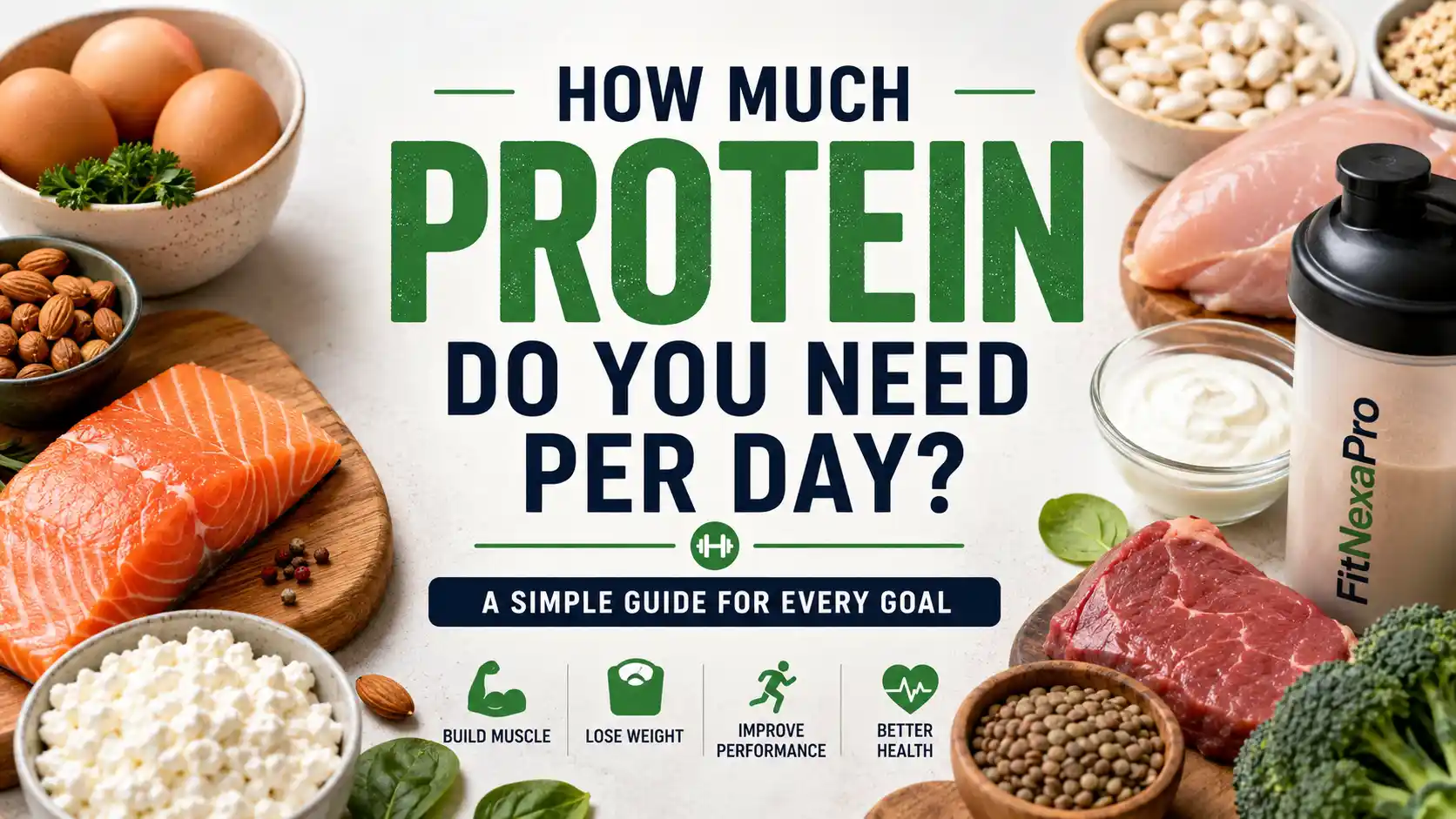
How Much Protein Do You Need Per Day? A Simple Guide
Protein is one of the most important nutrients in your diet. Your body needs it to build and maintain muscle, repair tissues, and support many normal body functions.
But how much protein do you need per day?
The answer is different for everyone. Your protein needs can depend on your body weight, activity level, age, diet, and fitness goals.
Someone who rarely exercises may need a different amount of protein than someone who lifts weights several times a week. Your needs may also change if you are trying to lose weight while maintaining muscle.
The good news is that getting enough protein does not have to be complicated.
Once you understand your basic needs and learn which foods contain protein, it becomes much easier to build balanced meals throughout the day.
What Is Protein?
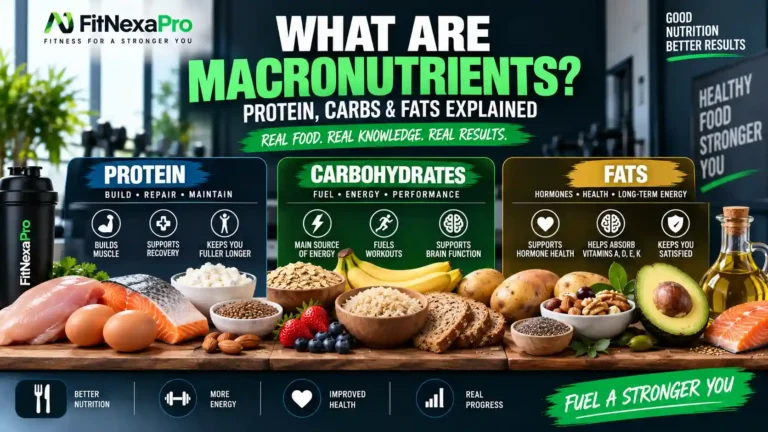
Protein is one of the three main macronutrients in food. The other two are carbohydrates and fats.
Protein is made from smaller compounds called amino acids.
Your body can produce some amino acids on its own, while others need to come from your diet. These are known as essential amino acids.
Protein plays several important roles in the body. It helps build, maintain, and repair tissues and is particularly important for muscle.
Protein is found in many different foods, so you do not necessarily need supplements to meet your daily needs.
How Much Protein Do You Need Per Day?
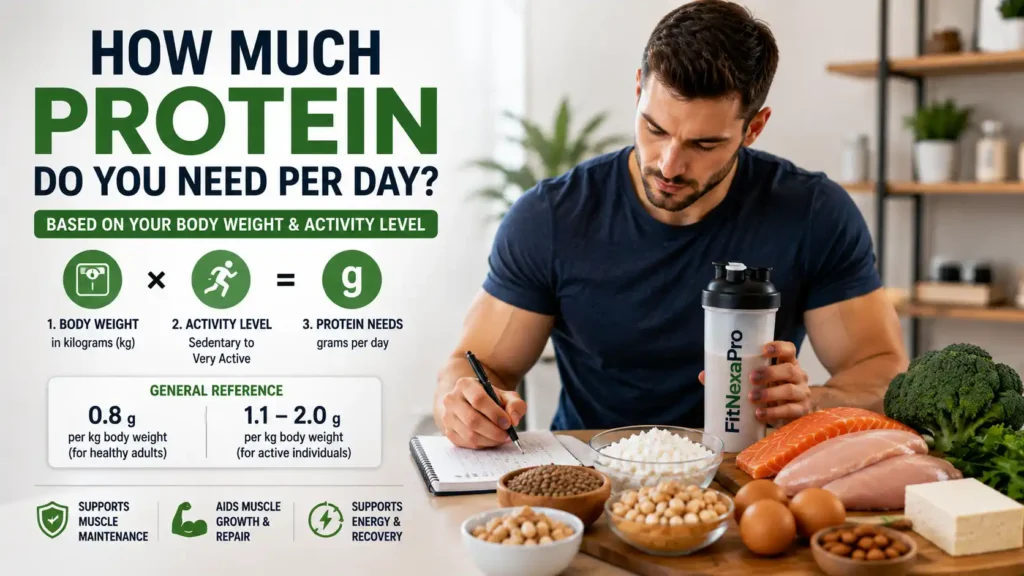
For healthy adults, a commonly used baseline is around 0.8 grams of protein per kilogram of body weight per day. European guidance uses a very similar Population Reference Intake of 0.83 grams per kilogram per day for adults.
This is a general reference level rather than a perfect target for every person.
To get a rough estimate using 0.8 grams per kilogram, multiply your body weight in kilograms by 0.8.
For example, someone weighing 70 kg would calculate:
70 × 0.8 = 56 grams of protein per day
Someone weighing 80 kg would get:
80 × 0.8 = 64 grams per day
And someone weighing 90 kg would get:
90 × 0.8 = 72 grams per day
These examples represent a basic reference amount for healthy adults. They do not mean that 56, 64, or 72 grams is automatically the ideal amount for every person at those body weights.
People who exercise regularly, train intensely, or have particular fitness goals may have different needs.
Why Your Protein Needs Can Be Different
Body weight is only part of the picture.
Your lifestyle matters too.
A person who spends most of the day sitting and does little structured exercise has different physical demands than someone who trains hard five days per week.
Your training type can also matter.
Someone doing resistance training is regularly challenging their muscles. Protein provides amino acids that the body uses in muscle protein processes and recovery.
Athletes can therefore require more protein than the basic adult reference intake. NIH consumer guidance for athletic performance notes a range of roughly 0.5 to 0.9 grams per pound of body weight per day, equivalent to about 1.1 to 2.0 grams per kilogram.
You should not automatically assume that more is always better, however. Your appropriate intake depends on your circumstances.
How Much Protein Do You Need If You Exercise?
If you regularly exercise, especially if you perform resistance training, your protein requirements may be higher than the basic reference amount.
Exercise places additional demands on your muscles.
Protein supplies amino acids that support muscle maintenance and repair.
The exact amount you need depends on factors such as your body weight, training frequency, training intensity, total calorie intake, and goals.
Rather than becoming obsessed with one exact number, use a sensible target and pay attention to your overall diet.
You can use the FitNexaPro Protein Calculator to get a personalized starting estimate based on your information and goal.
How Much Protein Do You Need to Build Muscle?
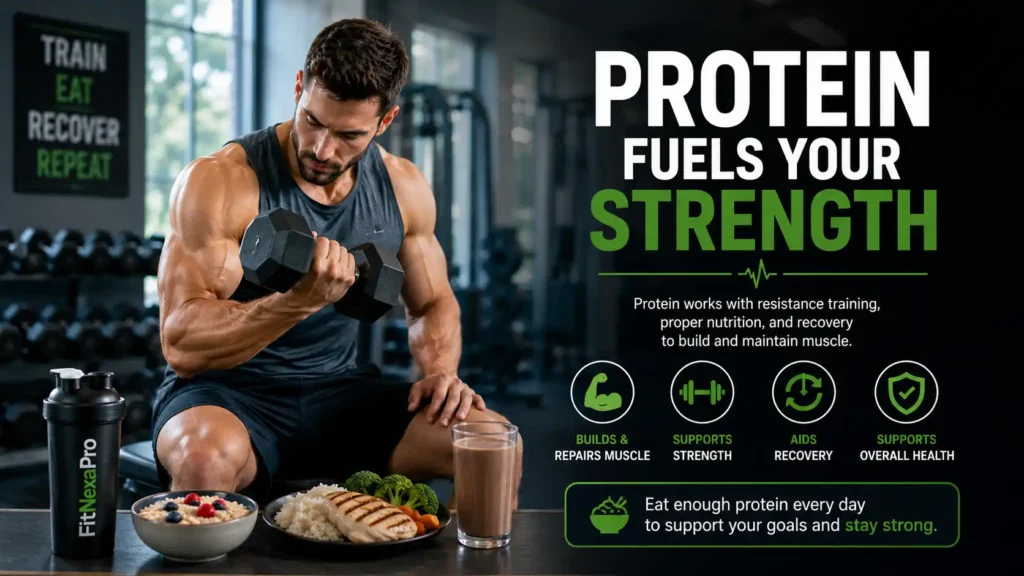
If building muscle is your goal, eating enough protein is important, but protein alone will not build significant muscle.
Your muscles also need a reason to adapt.
That is where resistance training becomes important.
Exercises such as squats, presses, rows, pull-ups, resistance-band movements, and weight training challenge your muscles.
You then need appropriate nutrition and recovery to support adaptation.
Your overall calorie intake matters too.
Eating huge amounts of protein while following a poorly structured workout plan will not automatically produce better results.
Think of protein as one part of the muscle-building process alongside progressive training, sufficient energy, recovery, and sleep.
How Much Protein Do You Need for Weight Loss?
Protein can also be useful when your goal is losing weight.
When you reduce calories, you still want your diet to provide adequate nutrition.
Protein-rich foods can help form satisfying meals and support maintenance of muscle alongside resistance training.
This does not mean you need to follow an extreme high-protein diet.
Instead, make sure protein is included regularly in your meals while keeping your overall calorie intake appropriate for your goal.
For example, you might include eggs or Greek yogurt at breakfast, chicken or lentils at lunch, and fish, lean meat, tofu, or beans at dinner.
If you are currently trying to lose weight, read our guide on Calorie Deficit for Weight Loss to understand how your calorie intake and protein target can work together.
Protein and Calories
Protein still contains calories.
One gram of protein provides approximately 4 calories.
That means increasing protein does not give you unlimited freedom to eat without considering your overall energy intake.
Imagine adding multiple protein shakes, protein bars, large servings of meat, and high-calorie snacks to your existing diet.
Even though these foods contain protein, the additional calories still count toward your daily intake.
If weight loss is your goal, you need to consider both your protein intake and your total calorie intake.
You can use your Calories Calculator to estimate your daily energy needs.
Best High-Protein Foods
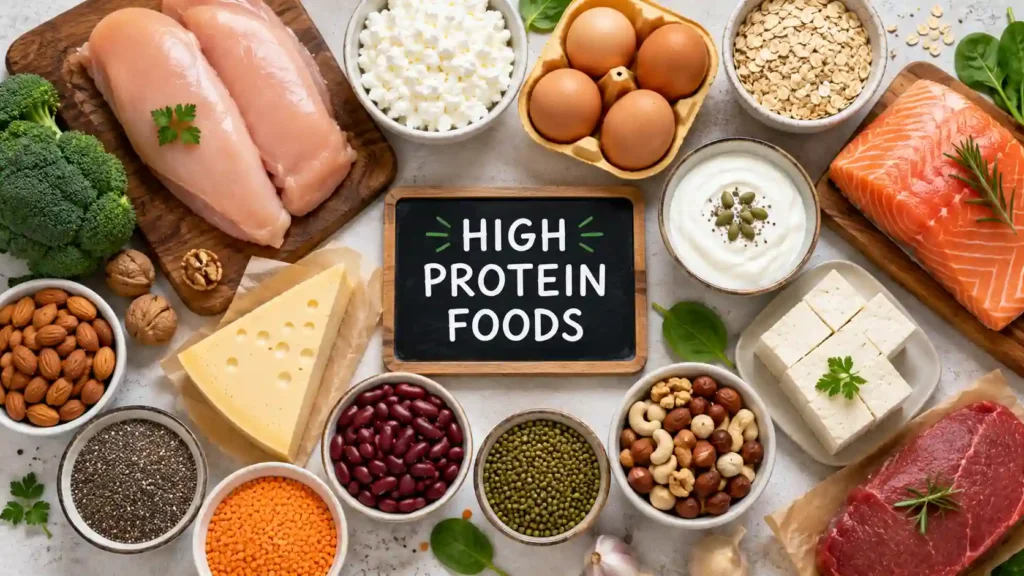
You can get protein from both animal and plant foods.
Common animal-based protein sources include chicken, turkey, eggs, fish, lean beef, Greek yogurt, cottage cheese, milk, and seafood.
Plant-based options include lentils, beans, chickpeas, tofu, tempeh, peas, nuts, seeds, and various grains.
You do not need to eat the same protein source at every meal.
Variety can make your diet more enjoyable while also helping you obtain a wider range of nutrients.
NIH guidance notes that animal foods such as meat, poultry, fish, eggs, and dairy provide all essential amino acids. A varied plant-based diet can also supply the essential amino acids your body needs.
Can You Get Enough Protein From a Plant-Based Diet?
Yes.
A well-planned vegetarian or vegan diet can provide protein.
Beans, lentils, chickpeas, soy foods, tofu, tempeh, nuts, seeds, peas, and whole grains can all contribute.
You do not necessarily need every meal to contain every essential amino acid in perfect proportions.
Eating a varied diet containing different plant foods throughout the day can help provide the amino acids your body needs.
People following a plant-based diet should still pay attention to their overall nutrition, not just protein.
Should You Eat Protein at Every Meal?
For most people, spreading protein across several meals is a practical approach.
Imagine your target is 100 grams per day.
You could get some at breakfast, some at lunch, some at dinner, and perhaps a smaller amount from a snack.
That may feel much easier than reaching dinner and realizing you still need most of your daily protein.
For example, breakfast might include eggs and Greek yogurt.
Lunch could contain chicken, tuna, tofu, or lentils.
Dinner might include fish, lean meat, beans, or another protein source.
Snacks could include yogurt, cottage cheese, milk, nuts, or another food that fits your diet.
The exact distribution does not need to be perfect.
Consistency across your overall diet is more important than worrying about every gram at every meal.
Do You Need Protein Immediately After a Workout?
You may have heard that you need to drink a protein shake within 30 minutes of finishing your workout or you will lose your chance to build muscle.
The reality is less dramatic.
Research summarized by the NIH indicates that consuming protein within one hour before or after exercise does not necessarily produce greater muscle strength or size, and the post-exercise period in which protein can support muscle-building processes is considerably longer than a tiny 30-minute window.
So you do not need to panic if you cannot drink a shake immediately after your last set.
Focus on getting adequate protein throughout the day.
Having a protein-containing meal around your workout can still be convenient, but there is no reason to treat the stopwatch as the most important part of your nutrition plan.
Do You Need Protein Powder?
No.
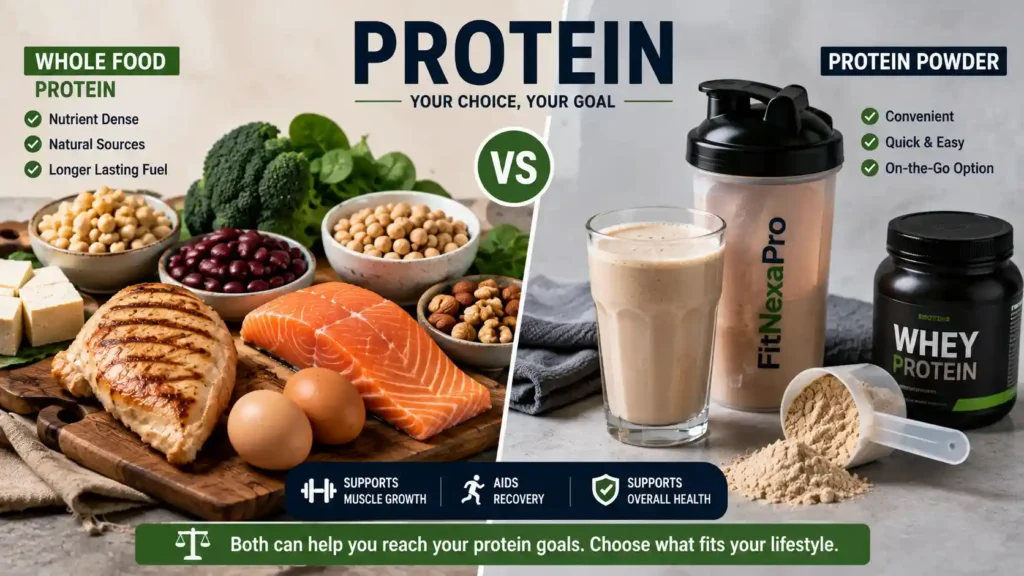
Protein powder is optional.
You can meet your protein needs entirely through regular foods.
Chicken, fish, eggs, dairy products, tofu, lentils, beans, and other protein-rich foods can provide plenty of protein.
Protein powder is mainly about convenience.
For example, someone with a busy schedule may find it easier to prepare a protein shake than cook another meal.
Whey protein is a common choice, while plant-based powders made from soy, pea, rice, or combinations of plant proteins are also available.
Think of protein powder as food in a convenient form rather than something that is required for fitness results.
Is More Protein Always Better?
No.
Once you are meeting your needs, continuously adding more protein does not automatically mean you will build muscle faster or become healthier.
Your body also needs carbohydrates, dietary fats, fiber, vitamins, minerals, and sufficient total energy.
A diet that focuses almost entirely on protein can push out other nutritious foods.
Your goal should be a balanced diet that provides enough protein rather than simply trying to consume the highest amount possible.
It is worth noting that the Food and Nutrition Board has not established a tolerable upper intake level for protein, but NIH guidance still advises caution with very high protein intakes because information about potential adverse effects is limited.
What About Protein and Kidney Health?
This topic requires some context.
High-protein diets and kidney health are often discussed together, but recommendations can differ depending on whether a person has healthy kidneys or existing kidney disease.
NIH’s review of sports-nutrition evidence notes that high-protein diets studied for several months in healthy people did not appear to compromise renal function. However, this should not be interpreted as personalized advice for someone with kidney disease or another medical condition.
If you have kidney disease, impaired kidney function, or another medical condition that affects your dietary requirements, speak with your doctor or a registered dietitian before significantly changing your protein intake.
Common Mistakes When Increasing Protein
One common mistake is thinking that every food marketed as “high protein” is automatically healthy.
A product can contain protein while also being high in calories, added sugar, sodium, or saturated fat.
Read the full nutrition information rather than looking only at the protein number on the front of the package.
Another mistake is relying almost entirely on protein shakes.
Shakes can be convenient, but whole foods provide additional nutrients and can make meals more satisfying.
People also sometimes increase protein without considering calories.
If you simply add hundreds of calories worth of protein foods to your existing diet, that can make achieving a calorie deficit more difficult if weight loss is your goal.
Finally, do not forget the rest of your diet.
Vegetables, fruits, whole grains, healthy fats, and fiber-rich foods still matter.
How to Increase Protein Without Making Your Diet Complicated
You do not need to completely redesign your diet overnight.
Start with your existing meals.
Look at breakfast first.
If your breakfast contains very little protein, consider adding eggs, Greek yogurt, cottage cheese, milk, or another suitable protein source.
Then look at lunch.
You could add chicken, tuna, beans, lentils, tofu, or another protein-rich food.
Do the same with dinner.
Small changes across several meals can add up quickly.
You can also keep convenient protein foods available for busy days.
The best diet is not the one that looks perfect on paper. It is one that provides good nutrition and works with your lifestyle.
How Do You Know If You Are Eating Enough Protein?
The easiest starting point is to estimate your requirements based on your body weight and activity level.
You can then look at your normal diet and see approximately how much protein you consume.
You do not necessarily have to track protein forever.
Tracking your food for a few days can simply help you understand what your normal intake looks like.
Once you learn how much protein common foods contain, estimating your daily intake becomes easier.
Use the FitNexaPro Protein Calculator if you want a quick starting estimate.
Remember that online calculators provide estimates, not medical prescriptions.
Frequently Asked Questions
How much protein do you need per day?
For healthy adults, around 0.8 grams of protein per kilogram of body weight per day is a commonly used basic reference amount. EFSA uses 0.83 g/kg/day as its adult Population Reference Intake. Individual requirements may differ depending on activity, training, age, diet, and other factors.
Is 100 grams of protein a day enough?
It depends on the person.
For one person, 100 grams may be more than their basic requirement. For another person with a larger body size or demanding training program, their target may be different.
Calculate your needs based on your own body weight and circumstances rather than copying someone else’s number.
How much protein should I eat to build muscle?
People who regularly train may require more protein than the basic adult reference intake. NIH guidance for athletes describes approximately 1.1 to 2.0 g/kg/day, depending on training demands and circumstances.
Resistance training, adequate calories, recovery, and your overall diet also matter.
Is 200 grams of protein too much?
You cannot determine this from the number alone.
Two hundred grams represents a very different intake for a 55 kg person than for a much larger athlete.
Your body weight, activity level, overall diet, health, and total calorie intake need to be considered.
Can I get enough protein without eating meat?
Yes.
Foods such as lentils, beans, chickpeas, tofu, tempeh, soy products, nuts, seeds, peas, and grains can contribute protein to a plant-based diet.
Are protein shakes necessary for building muscle?
No.
Protein shakes are convenient but not essential. You can get protein from normal food.
Should I drink protein before or after my workout?
Either can fit into a healthy diet. You do not need to consume protein within an extremely narrow window immediately after training. Your total protein intake across the day is more important.
Final Thoughts
So, how much protein do you need per day?
For healthy adults, roughly 0.8 grams per kilogram of body weight is a useful basic reference point, with EFSA using 0.83 g/kg/day. But that number is only a starting point.
Your actual needs can be influenced by your body weight, physical activity, training, calorie intake, and fitness goals.
If you exercise regularly or are focused on building and maintaining muscle, your needs may be higher.
Instead of trying to consume as much protein as possible, focus on getting an appropriate amount from nutritious foods and spreading it across your normal meals.
Combine that with a balanced diet, regular exercise, adequate recovery, and a calorie intake that matches your goal.
Protein is important, but it is only one piece of the bigger fitness and nutrition picture.
One Comment